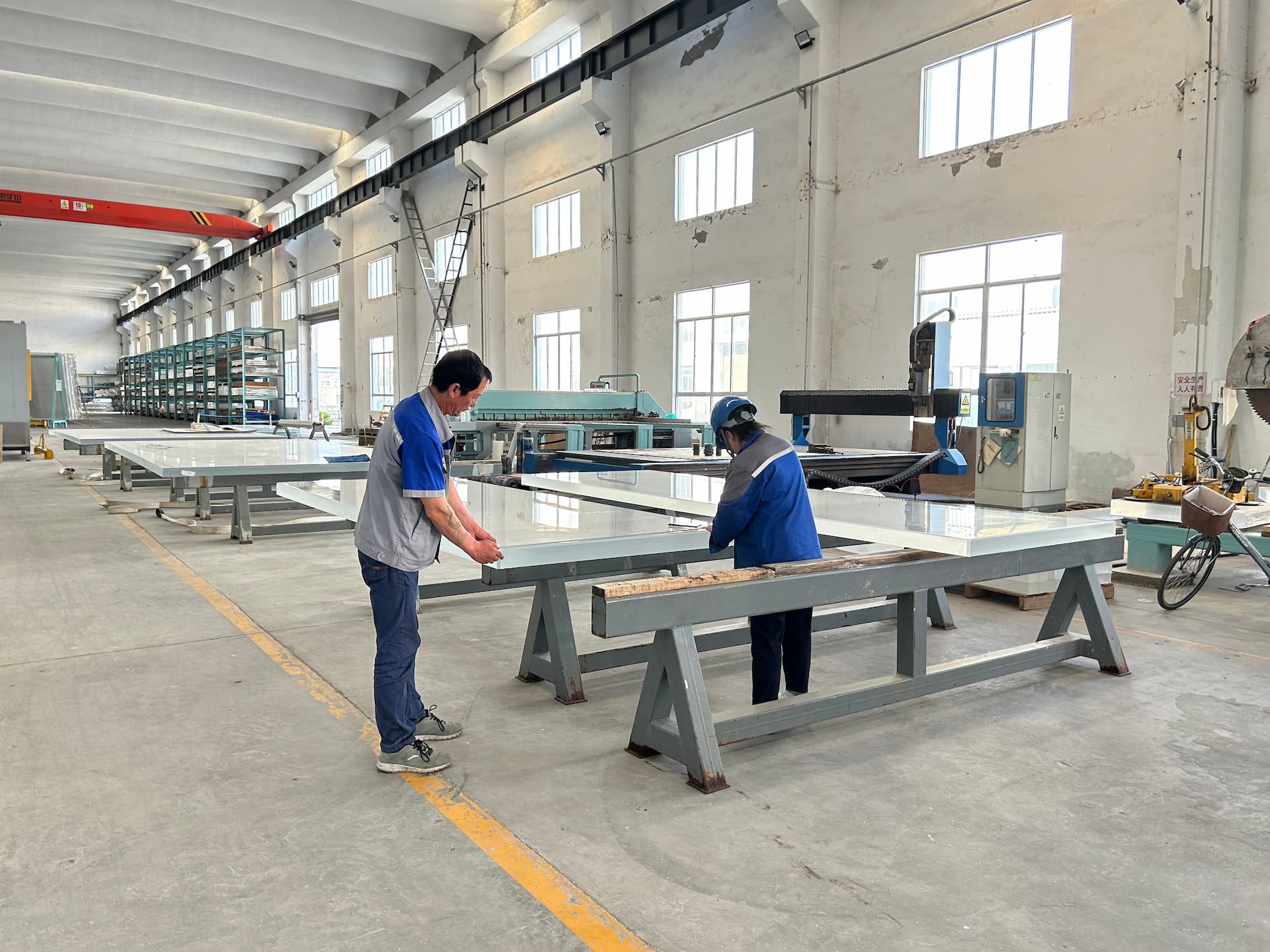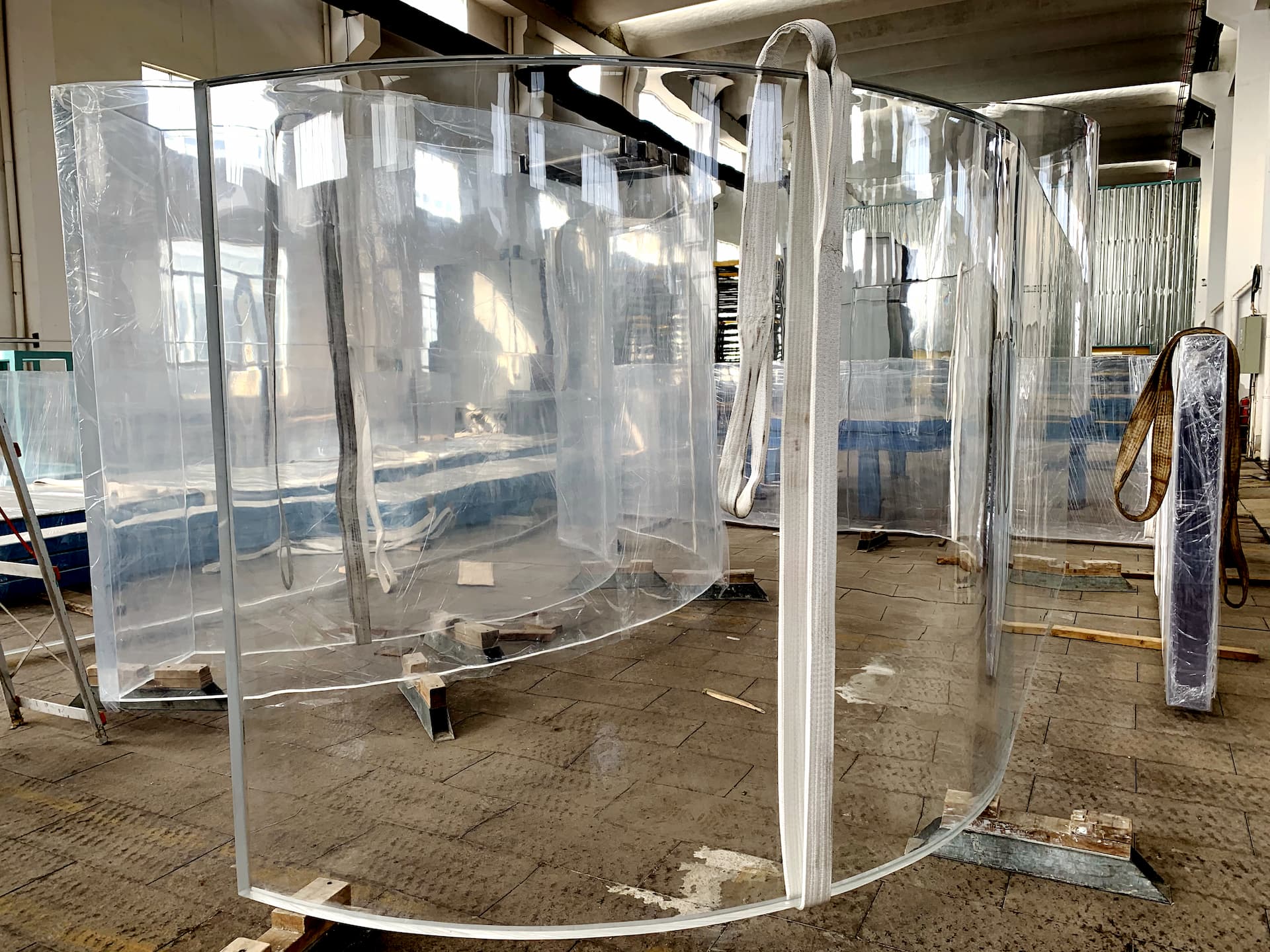
Can an extruded sheet hold a pool window, or must the panel be cast? A pool wall or an aquarium window holds tonnes of water for years. So the choice matters.
Grandview Acrylic has made pool and aquarium acrylic for 20 years. In that time, one thing about cast vs extruded acrylic has not changed. How the sheet is made decides its stress, its thickness and how safe it is.
Cast acrylic is made by letting liquid MMA monomer set in a mould. Extruded acrylic is pushed through a die in one long run. For thick pool and tank panels that carry load, cast is the usual choice. Extruded sheet is best for thin, light jobs.
How Cast and Extruded Acrylic Are Made
Cell Cast Acrylic and Bulk Polymerization
Cell cast acrylic is a solid sheet of PMMA made in a mould. Grandview’s cast methacrylate is 100% PMMA. Liquid MMA monomer sets into a solid sheet inside the mould. This is called bulk-monomer polymerization. The MMA is 100% pure and comes from Lucite.
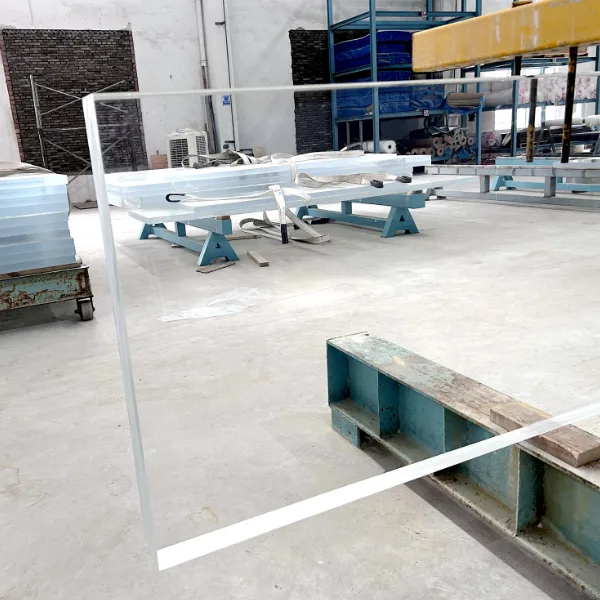
What Happens on an Extruded Sheet Line?
An extruded sheet line pushes melted acrylic through a die. The line keeps running without a stop. This is quick and cheap, so extruded acrylic usually costs less to make. It also limits how thick the sheet can be. Grandview makes cast acrylic.
Cast vs Extruded Acrylic: Key Differences
Side-by-Side Comparison
| Feature | Cast acrylic (Grandview) | Extruded acrylic |
| Method | MMA polymerized in a mould | Pushed through a die, usually cheaper to make |
| Thickness | 20 to 300 mm stock, 800 mm by lamination | Usually thinner gauges |
| Clarity | 93.2% transmittance, 0.30% haze (ASTM D1003) | Clear in thin gauges |
| Stress | Machined parts are annealed | Orientation stress from extrusion |
| Machining | Cut, CNC machined, drilled, bonded, polished | Softer, can gum or melt if cut slowly |
| Solvents | Excellent chemical reagent resistance, per Grandview | Narrower range |
| Tolerance | Thickness checked systematically | Tighter and more even |
| Pool and tank use | Windows, floors, walls, tunnels, cylinders | Small parts that carry no load |
Optical Clarity You Can See Through Water
Optical Clarity is the clarity of the image through water. Total luminous transmittance is 93.2%, according to Grandview data. That’s how much light is coming through. Haze 0.30% Both were tested to ASTM D 1003.
Inside the sheet, haze is light that scatters. A little dispersion goes a long way on a panel 100 mm thick or more. Low haze gives you crisp fish and swimsuits.
Why Internal Stress Decides Panel Safety
Strain trapped within the sheet is known as internal stress. It alters the way a panel deals with load. This is where cast and extruded acrylic vary in safety.
Extrusion leaves an orientation stress in the sheet. More load causes a sheet with stress to fail. Any acrylic, cast or extruded, will be stressed from machining.
How Annealing Releases Locked-In Stress
All machined acrylic items are anneals by Grandview. Annealing: gradual heating in oven to relieve stress. The oven is a convection oven with temperature control. The heat is kept below the softening point of the sheet. It moves up gently and stays up there for a long time.
The section is enclosed by air on all sides. Only parts under 50°C come out. Then they are carefully cooled at room temperature.
Thickness Range: Where Extrusion Stops
The thin sheets are best suited to extrusion. Extruded acrylic is often thinner than cast stock. Grandview offers cast stock thicknesses from 20 to 300 mm. Length and breadth do make a difference in range.
Deep pool and aquarium walls have to be that thick. The first limitation that rules out extrusion is the thickness of cast versus extruded acrylic.
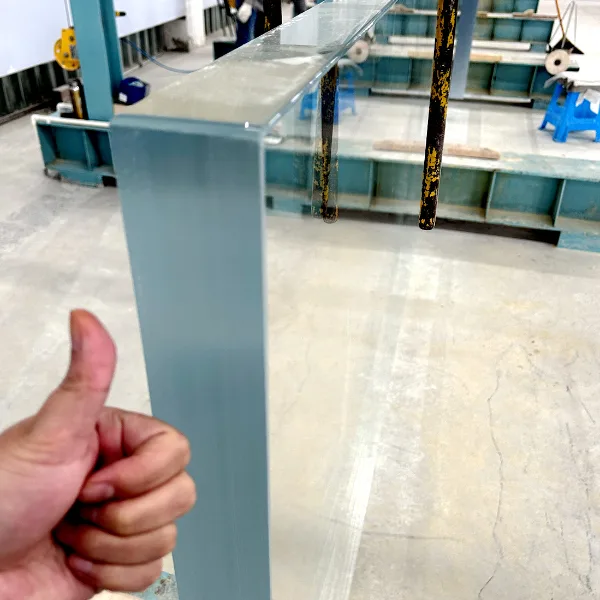
300 mm in a Single Monolithic Casting
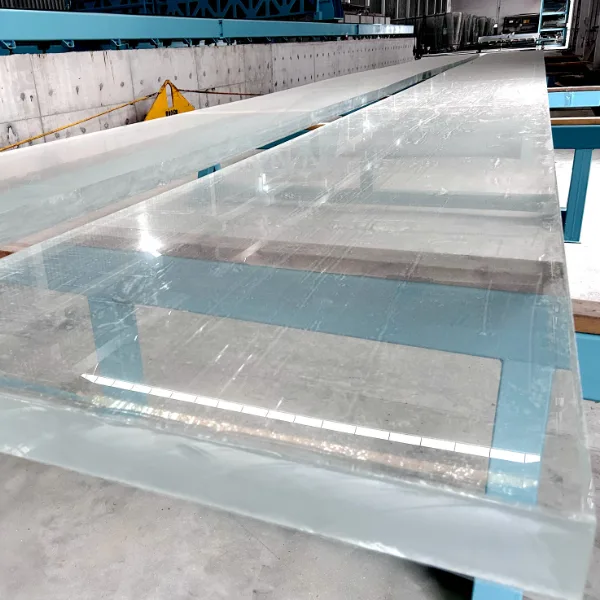
Grandview contains 45 casting tanks of various sizes. In monolithic casting, each pour cannot exceed 300 mm. Grandview has a big inventory. The tanks produce a lot of sheet. Upon receipt of an order, the team chooses a suitable sheet from available inventory.
How Lamination Reaches 800 mm Thickness
Lamination is the process of gluing together layers to form a thicker sheet. Grandview claims it can laminate sheets in 800 mm sizes. It produced an 800-mm sheet for the glass of a public aquarium. This sheet has been laminated. It is not poured in one.
Machinability, Bonding and Finishing
Machinability is the ease with which a sheet may be cut, drilled and shaped . Grandview cast block may be cut, CNC machined, drilled, bonded and polished per approved designs. Extruded acrylic is softer. If you run the cutter too slowly, it might gum up or melt.
What Thick Cast Stock Allows
- Supplementary material for milling recesses, holes, slots and contours
- Bonding at 45° or 90°
- Polished faces and edges, if required by the design.
- Blanks trimmed to size for the following stage
Chemical Resistance and Outdoor Aging
Pool and Tank Panels Are Built To Meet The Challenge Of Cleaning Products And Treated Water. Chemical Resistance Is Crucial. Grandview states their cast PMMA offers great resistance to light, aging, corrosion, and chemical reagents. Cast acrylic is also more resistant to a wider range of solvents than does extruded acrylic.
Anti-UV compounds added to Grandview. Panels may be exposed outside for 30 years without fading, it adds. In a 5,000 h xenon-arc light aging test, the sheet achieved gray scale 4 to 5. No noticeable yellowing was observed (ISO 105-A02).
Which Acrylic Fits Pools, Tanks and Tunnels?
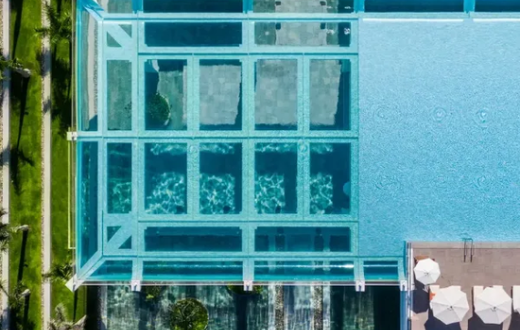
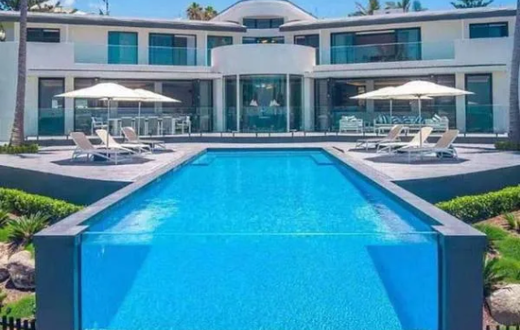
Cast acrylic is great for pool windows, pool floors, aquarium walls, tunnels, and cylinders. Grandview uses finite element analysis to determine the panel thickness. Extruded acrylic is only good for tiny, un-loaded parts.
The lab numbers alone will not tell you how much strain a panel can handle. Each project has to look at panel size, support, and service temperature. The cast versus extruded acrylic decision might be any cast alternative for panels that store water.
What Sets the Thickness of a Water-Loaded Panel?
Five things decide how thick a water panel must be. Engineers look at all five together. No one thing decides it alone.
Five Inputs That Set Panel Thickness
- Water depth: Use the deepest point of the panel, not the average.
- Panel span: This is the open gap between supports. A longer gap bends more.
- Support: The panel sits in a frame on three sides or four sides.
- Load and bending: The design sets how much the panel may bend.
- Safety factor: This is extra thickness kept above the bare minimum.
Does Cost Change the Choice?
Extruded acrylic is cheaper to produce. That is why it is utilized for signs, coverings and other light items. Price shouldn’t come first for a panel that retains water. Cast versus extruded acrylic. Stress, thickness and tested values. The price, look at it.
Which Mistakes Should Buyers Avoid?
Many mistakes in a cast vs extruded option occurs when the customer bypasses the engineering examination. A little error may undermine a panel that seems good.
Five Common Errors
- Choosing a sheet based on price alone
- Estimate the thickness by sight rather than by calculation
- Annealing after machining is skipped.
- Average water depth not deepest point
- The load on the panel is estimated by the lab value.
Inside Grandview’s Casting Plant
Plant Facts
- Size: over 20,000 m² and over 100 employees, with 45 casting tanks
- Focus: pool and aquarium acrylic, with every step done under one roof
- Quality system: QC built to ISO 9001:2000 standards, plus RoHS and CE certification
- Delivery: 7 to 10 days lead time
- Stains and bubbles: each square metre may have one large and two small, or four small, at least 150 mm apart. An impurity comparison card is used to check them.
FAQs
What is the difference between cast and extruded acrylic?
The difference is how the sheet is made. Cast acrylic sets in a mould. It can reach 300 mm in one pour. Extruded acrylic is pushed through a die. It suits thin sheet and costs less. Extrusion also leaves stress in the sheet.
Which is stronger, cast or extruded acrylic?
Cast acrylic is the better choice for panels that carry load. Grandview data shows a tensile strength of 70.6 MPa (ASTM D638). Its flexural strength is 106 MPa (ASTM D790). No extruded numbers are given here. The final panel also depends on its size, its support and its load.
Can extruded acrylic be used for aquariums?
Extruded acrylic is fine only for small parts that carry no load. Do not use it for windows or walls that hold water. Water weight, thickness and stress all point to cast panels.
How can you tell cast from extruded acrylic?
Look at the masking or edge label first. Extruded acrylic has a more even thickness across the sheet. A laser-engrave test also helps. Cast gives a frosted white mark. Extruded gives a faint mark.
How thick can cast acrylic be?
Grandview casts up to 300 mm in one pour. Lamination reaches 800 mm. Stock starts at 20 mm. The range depends on length and width.
How long does delivery take?
Grandview lists a lead time of 7 to 10 days. The final time depends on size, machining and finishing. Ask for the exact time when you request a quote.
Conclusion
For a panel that holds water, pick cast acrylic. It can be made very thick, and machined parts are annealed to ease stress. Extruded acrylic is best kept for small, light parts that carry no load. Grandview Acrylic is a good fit for this work. It casts, machines and anneals under one roof. It also works out the thickness of each panel with finite element analysis. Send us a drawing for a thickness check, or ask for a free sample.