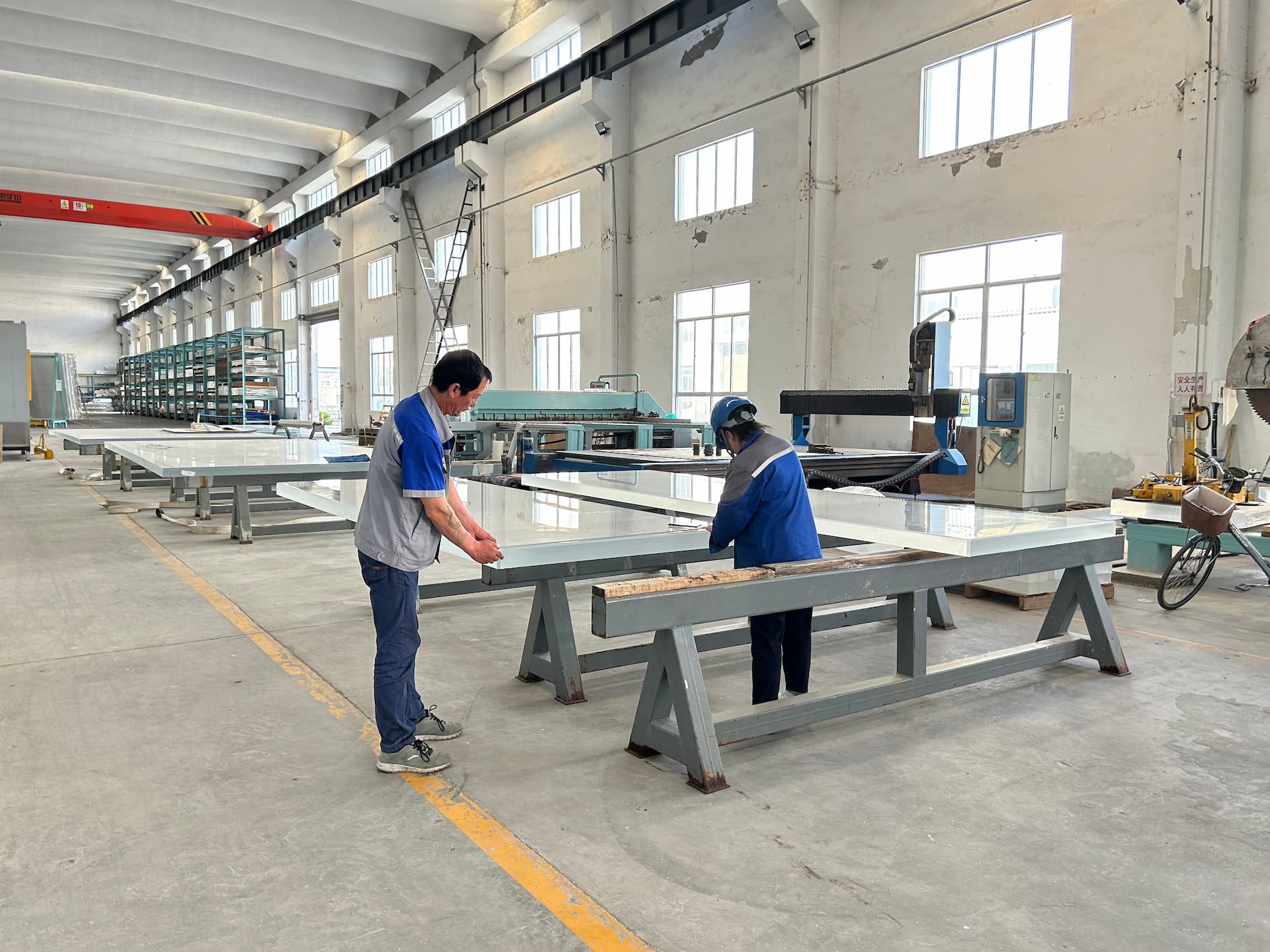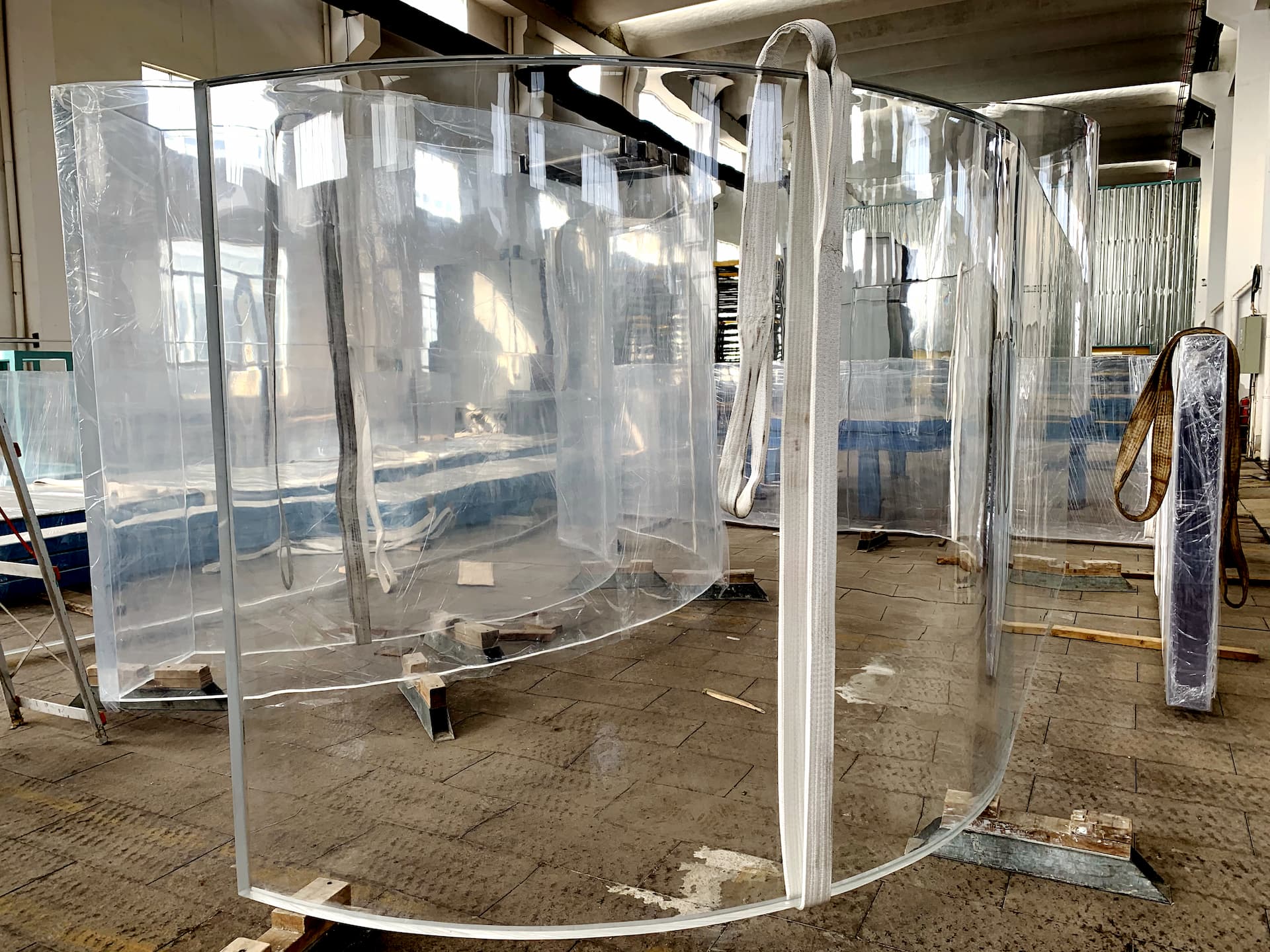
Do you need a clear part that is deeper than a thin sheet? Many builders use a thick cast acrylic block for this. Grandview Acrylic has made pool and aquarium acrylic for 20 years. In all that time, one thing has stayed true. You should pick a block by the shape you need, not just by how thick it is.
In this guide, you will learn what this block is made of and how it is made. You will also see its test results, sizes, shaping steps and main uses.
A Thick Cast Acrylic Block, Defined Simply
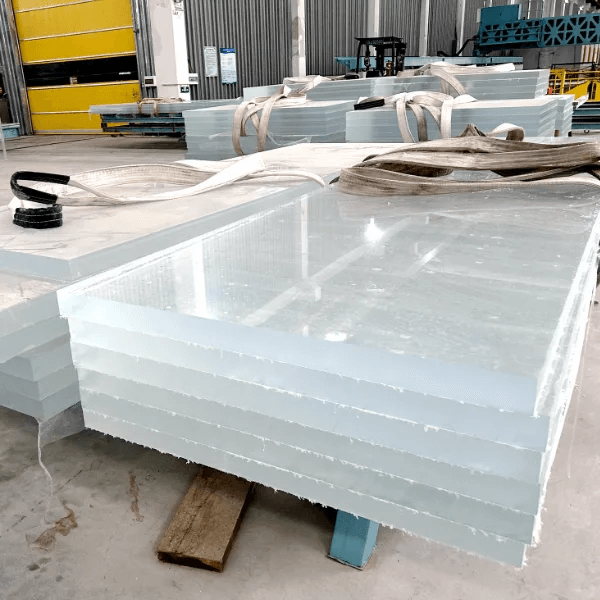
A thick cast acrylic block is a solid, clear piece of cast PMMA plastic. It comes as thick stock, blocks, panels or blanks cut to size. People use it when a part needs real depth and extra material to shape. It can be cut, drilled, joined and polished.
PMMA is short for polymethyl methacrylate. It is the plastic used to make all acrylic sheet. A thin sheet is often not deep enough for a part. A block gives you more depth and more material to shape.
Grandview can send each thick cast acrylic block as a plain blank. It can also shape the block close to the final part. Your drawing decides which one you get. People may also call it a solid acrylic block or a PMMA acrylic block.
Product Facts in One Table
| Item | Detail |
| Material | Cell-cast PMMA acrylic |
| Supply form | Thick solid stock, rectangular blocks, panels and custom-cut blanks |
| Listed stock range | 20–300 mm, based on length and width |
| Custom processing | Cutting, CNC machining, drilling, bonding, surface finishing and edge polishing |
| Quality checks | Thickness, dimensions, visible surface, optical distortion and stress-relief review |
What Goes Into Solid PMMA Acrylic Block Stock?
The block is entirely made of PMMA. This sort of plastic will become hot and soft. Grandview makes its cell-cast acrylic by pouring a liquid raw material into a pool. Then the liquid gradually turns into a sheet of solid.
The Raw Material Behind the Clarity
This liquid raw material is termed MMA, for methyl methacrylate. PMMA is made from this base. Only fresh MMA from Lucite’s Shanghai factory, with 100% purity, is used by Grandview. Anti-UV additives are also used in the mix. They assist to maintain the acrylic clear and in preventing it from turning yellow in the sun.
How Cell-Cast Acrylic Is Poured and Cured
In a casting pool, cell-cast acrylic is made. When liquid MMA is added to the pool, it solidifies into a sheet. Grandview has 45 of these pools, of various sizes. Every PMMA acrylic block it sells begins in one of these. The factory maintains a large stock of sheets since there are so many pools. To ship quicker, your order is cut from this stock.
A single pour may make a sheet as thick as 300 mm. For thicker sheets, the factory connects the cast layers into a single piece. This process is called lamination, and it may be as much as 800 mm thick. The full-size list is on the monolithic casting process page.
Cast Versus Extruded, in Plain Terms
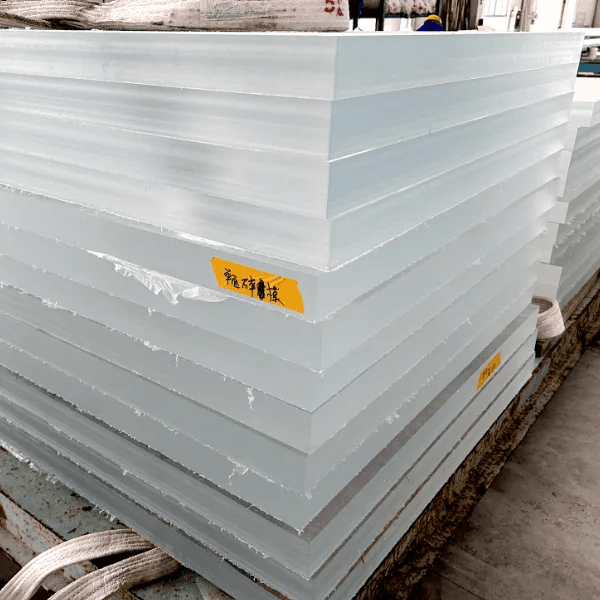
Cast acrylic is clearer than extruded acrylic. It is also easy to cut, shape, and polish. Simple jobs are done using extruded acrylic since it costs less. If your part is deep and requires a polished finish, then cast acrylic is the preferable option.
Clear Cast Acrylic Block Properties in Numbers
93.2% of light may pass through a clear cast acrylic block from Grandview. It has a haze of just 0.30%, which means it seems almost fully clear. The company’s test sheet provided all of the numbers below.
Test Results by Standard
| Property | Value | Test Standard |
| Density | 1.19 g/cm³ | ASTM D792 |
| Total luminous transmittance | 93.2% | ASTM D1003 |
| Haze | 0.30% | ASTM D1003 |
| Vicat softening temperature | 113.9°C | ASTM D1525 |
| Tensile strength | 70.6 MPa | ASTM D638 |
| Flexural strength | 106 MPa | ASTM D790 |
| Light ageing, 5000 h xenon-arc | Grey scale 4–5; no visual yellowing | ISO 105-A02 |
Grandview runs two tests on each batch. The first is Vicat softening temperature. It shows how hot the plastic gets before becoming soft. The second is the tensile strength. It demonstrates how hard you can pull the plastic before it breaks.
The amount of weight your completed part can hold cannot be determined by lab numbers. Each part must be checked individually. Look at the size of it, the cut of it, the way it’s held, and how hot it’s going to become.
Stock Sizes for a Large Acrylic Block Order
Grandview keeps stock from 20 to 300 mm thick. How thick a sheet can be depends on its length and width. The two biggest sheets are 8100 × 3700 mm, at 120–300 mm thick, and 9150 × 3000 mm, at 100–250 mm thick.
Stock Size Reference
| L × W (mm) | T (mm) | L × W (mm) | T (mm) |
| 1300 × 2500 | 20–70 | 5000 × 1800 | 30–150 |
| 1350 × 2650 | 20–100 | 5500 × 2100 | 30–150 |
| 1450 × 2700 | 20–100 | 6200 × 3000 | 50–250 |
| 1600 × 2600 | 20–100 | 6700 × 3000 | 50–250 |
| 1650 × 3150 | 20–100 | 8200 × 3000 | 80–250 |
| 3200 × 2200 | 20–110 | 8700 × 3000 | 80–250 |
| 3500 × 1650 | 20–110 | 9150 × 3000 | 100–250 |
| 4250 × 2750 | 30–110 | 8100 × 3700 | 120–300 |
Stock changes over time. So check the size and thickness with Grandview before you ask for a price. If you order a large acrylic block, the team also helps pack and ship it safely once your order is confirmed.
CNC Machined Acrylic Block: Cut, Drill, Shape
A CNC machined acrylic block is a solid piece shaped by computer-controlled tools. These tools can cut pockets, holes, grooves and shaped edges into a solid acrylic block. This only works because a thick cast acrylic block has plenty of material to cut into.
The CNC machining workshop has 5 machines. Some are simple, and some are full CNC machines. They can cut square, round, oval, triangle and 3D wavy shapes.
The team plans each job from the final shape, not just the thickness. It also leaves extra material to cut away. When two parts must join, they are glued at 45 or 90 degrees. The joins have no air bubbles.
Custom Cut Acrylic Block Blanks and Edges
A custom cut acrylic block can come in four finishes. It can be left as it came from the pool, cut, shaped or polished. Your approved drawing decides which one you get. Polished sides go through three steps:
- Sanding starts with rough 60 mesh paper.
- Finer paper follows, step by step, up to 1500 mesh.
- Polishing wax from Germany gives the final shine.
Why Machined Blocks Are Annealed and Inspected
In acrylic, cutting and drilling build up hidden stress. An acrylic block that has been CNC machined undergoes annealing, a gradual heat treatment that removes stress. For each machined acrylic part, Grandview does this. Tiny cracks known as crazing may develop later if the stress stays.
This is done in a special oven that blows warm air and maintains the heat steady. The oven always stays below 80°C for cast acrylic. The heat rises gradually and steady. After that, everything stays the same for a while. Then the part cools down slowly. It only comes out when the temperature is below 50 degrees, and then it cools the rest of the room.
What Gets Checked Before Packing
- Thickness and size against the drawing
- Visible surfaces and optical distortion
- A review of the stress-relief step
- Stains and bubbles against a written standard
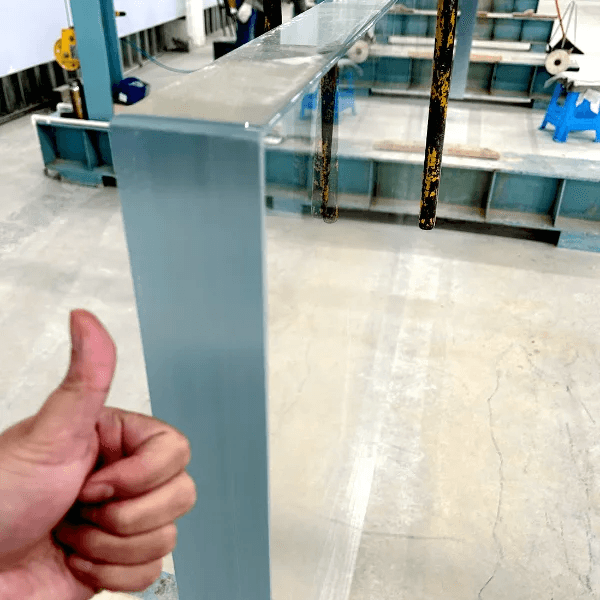
A clear cast acrylic block easily shows even a small spot. Grandview thus sets clear boundaries. One large stain and two small ones may be seen on each square meter. They must be at least 150 mm apart. A large stain is 1–3 mm2; a small stain is 0.3–1 mm². The same method is used to count air bubbles. You can read the full rules on the stain and bubble limits page.
Where Cast Acrylic Blocks Earn Their Place
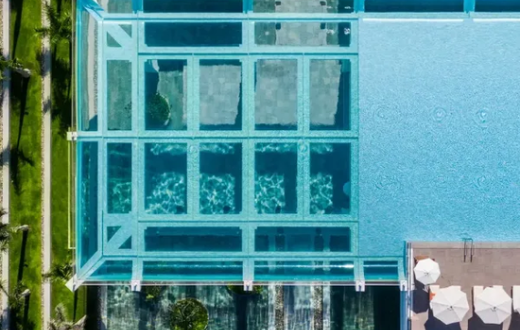
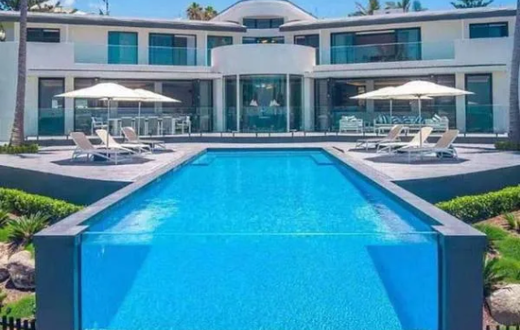
A solid acrylic block works well when a part must be both clear and deep. People use it in building features, display piece,s and water features.
It is also used for aquarium and pool parts, test models and custom factory parts. It suits many other clear custom pieces too. The guide to industrial acrylic blocks shows more of these uses.
Choose your block by the shape you require,, not simply the thickness. A polished display piece and a test model with deep pockets, for instance, could have the same thickness. But each requires a unique starting block
The Factory Behind Grandview’s Block Supply
Factory Scale
Grandview has made pool and aquarium acrylic for 20 years. More than 100 people work at the factory. The site covers over 20,000 square meters. It has 45 tanks for casting acrylic, and one pour can reach 300 mm thick.
Factory Certification
Grandview set up its quality checks to follow ISO 9001:2000 standards. It also has RoHS and CE certificates. The company sells to North America, Europe, the Middle East and Southeast Asia. You can learn more in the Grandview Acrylic company profile.
Delivery Cycle
Most orders are ready in 7–10 days. A large acrylic block may take longer. The time depends on the size, how many pieces you order and the time of year. You can order just 1 piece. Small samples are free, but you pay the shipping cost.
What to Send Before You Request a Quote
The best way to start is to send a drawing with all the sizes marked. A simple hand sketch is fine too, as long as it shows the points below.
Details Your Sketch Should Show
- Overall size and final shape
- Critical tolerances
- Faces or edges that need polishing
- How many pieces you need
Before you ask about a thick cast acrylic block, check the size you need. Note its length, width and thickness. Also say how much extra material you want left for cutting. Grandview’s project team can look at your drawing any time, 24/7.
FAQs
- How thick can a cast acrylic block be?
A cast acrylic block from Grandview can be 20 to 300 mm thick from stock. One pour can make a sheet up to 300 mm thick. By joining layers, the factory can go up to 800 mm.
- Is an acrylic block different from acrylic sheet?
Yes, a block is much deeper than a thin sheet. It has extra material to cut into. A thin sheet is too flat for deep pockets or holes.
- Does a thick cast acrylic block yellow outdoors?
No, it did not turn yellow in a 5000-hour strong light test. It scored grey scale 4–5 under ISO 105-A02. Grandview also adds anti-UV additives. It gives a 30-year warranty for outdoor anti-UV use.
- Is cast acrylic exact to its listed thickness?
No, cast acrylic is not always exactly the listed thickness. A sheet can be a little thicker in some spots than others. So the factory checks the thickness and leaves extra material to cut away.
Conclusion
A good thick cast acrylic block starts with the part you want to make. Think about its shape, thickness, finish and how it will be checked. Then send a clear drawing. Grandview Acrylic is a good choice for this kind of work.
It makes its own acrylic and keeps a large stock. It also cuts, shapes and heat-treats parts in its own factory. On top of that, it shares its test results openly. Send your drawing through the acrylic project quote form to get it reviewed.