
CNC machining.
For thick acrylic.
Five machine tools, from conventional machining equipment to CNC systems, turn acrylic blanks into project-specific parts. We review the shape, panel dimensions and installation details before selecting the equipment and machining route for your pool, aquarium or custom acrylic component.

Acrylic Machining, Matched to the Drawing
Cut-to-size acrylic profiles
Square, round, oval and triangular outlines are selected to match the dimensions and profile shown on your drawing.
Equipment matched to the part
Five machine tools of different types, from conventional machining equipment to CNC systems, support different processing requirements.
Contours and 3D wavy forms
Contoured and 3D wavy acrylic profiles are reviewed against the required geometry before the machining route is selected.
Edges and installation interfaces
Overall panel size, edge details and the support or bonding interface are reviewed together, rather than relying on the viewing opening alone.
Tooling, support and heat control
Tool condition, stable workholding and chip removal matter when machining PMMA. The setup is planned around the part and the required surface condition.
Finishing and dimensional review
Machining establishes the geometry. Dimensional checks, polishing and stress-relief requirements are coordinated with the subsequent manufacturing stages.
Square, Round, Oval & Custom Acrylic Profiles
From straightforward flat panels to angular and contoured components, the final shape starts with a clear drawing. These five profile families form part of our machining scope.
Square acrylic sheet
Straight sides and defined corners for cut-to-size panels.
Round acrylic sheet
Circular profiles defined by the specified diameter.
Oval acrylic sheet
Elliptical outlines matched to the required length and width.
Triangular acrylic sheet
Angled profiles with corners detailed on the drawing.
3D wavy acrylic sheet
Contoured forms reviewed against the required 3D geometry.
For pool and aquarium panels, the overall acrylic part extends beyond the visible opening into its supports. Provide both the full panel dimensions and the clear viewing dimensions for review.
A Closer Look at Acrylic CNC Machining
A guided look at the machine, its cutting head and the working area.
The setup behind the shape
The panel, machine bed and spindle work as one setup. These workshop views show the equipment around the acrylic; the drawing defines the profile, interfaces and finish that the part needs.
A thick acrylic blank positioned beneath the gantry for machining.

The spindle assembly and cutting head above the supported work area.
Overall part size, thickness and support must be considered together when planning the machining operation.
Worktables, Gantries & Panel Processing
Different views of the equipment and workshop layout.

A wider view of the machining area and its surrounding handling space.

The gantry, spindle and slatted worktable viewed from the workshop walkway.

A view across the worktable, gantry and operator access area.

The long machine bed and its production setting, seen from above.

An extended view along the machine bed and longitudinal travel area.

A second view of the gantry, thick panel and its worktable support.
Machined Profiles & Acrylic Details
Panel geometry, edge condition and the handling of thick acrylic blanks.
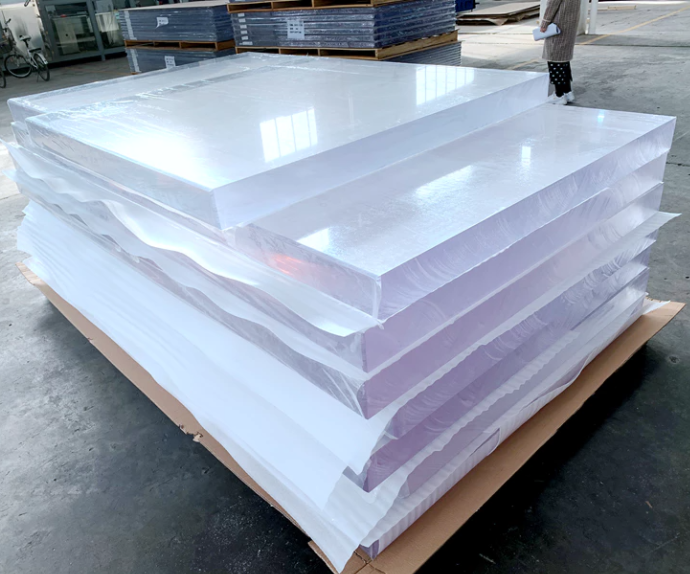
Rectangular blanks with defined edges, shown before subsequent finishing or assembly.
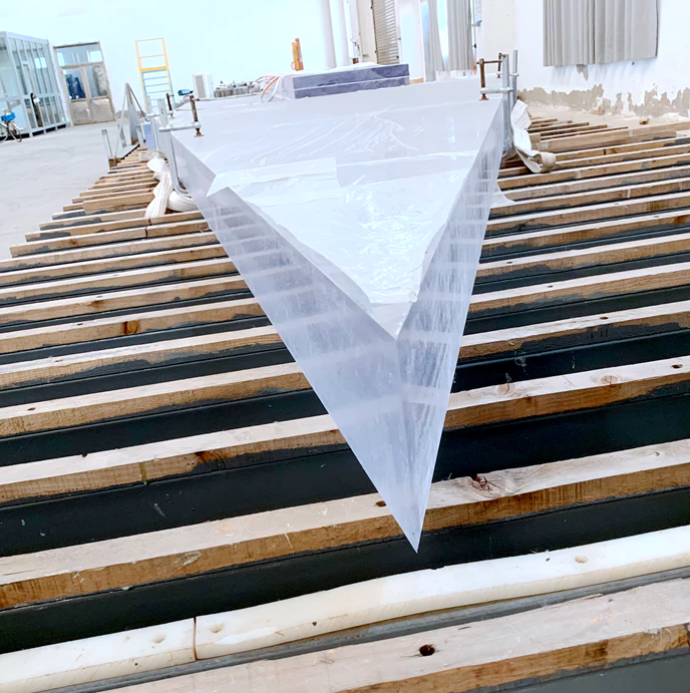
An angular component showing how a project profile differs from a rectangular blank.
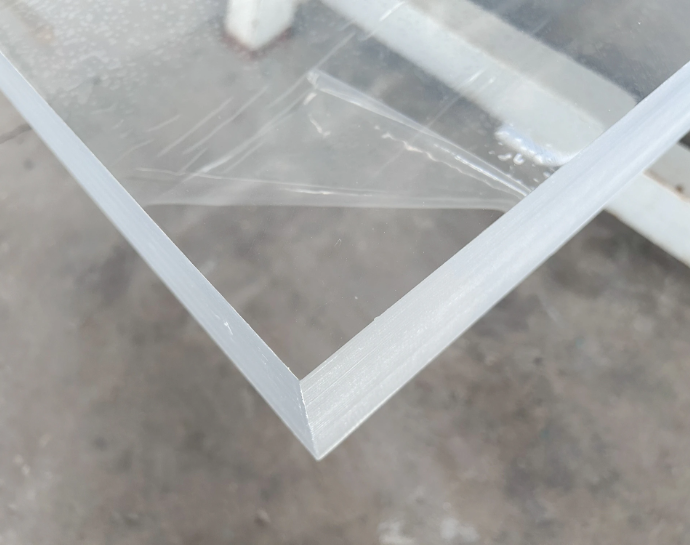
A close view of the corner geometry and the adjoining panel edges.
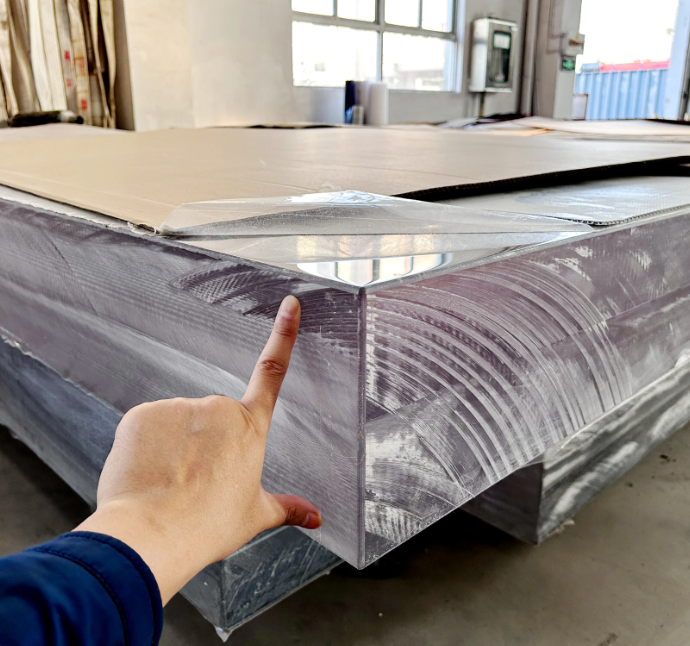
Visible toolpath marks show the machined contour before the specified final finish.
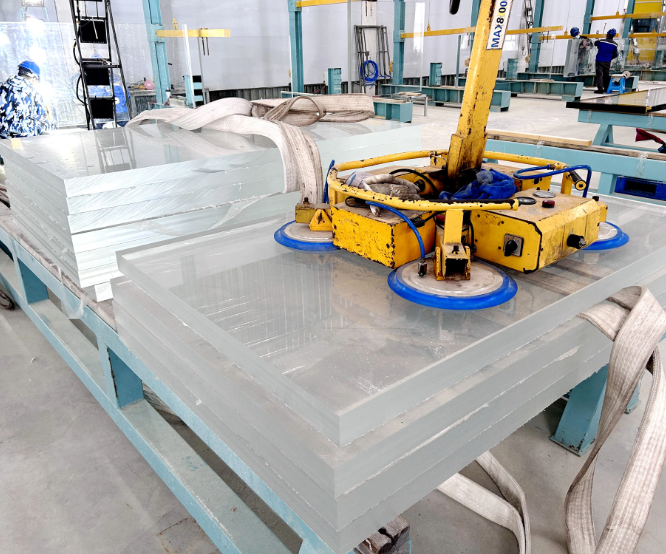
Lifting equipment and support arrangements used around thick acrylic blanks.
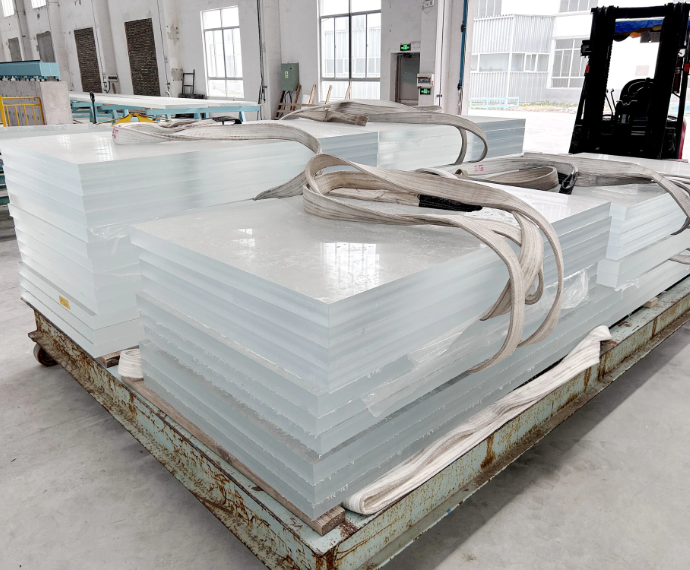
Panel blanks arranged for the next handling or manufacturing stage.
More Views from the Machining Area
Additional equipment and panel-preparation views.
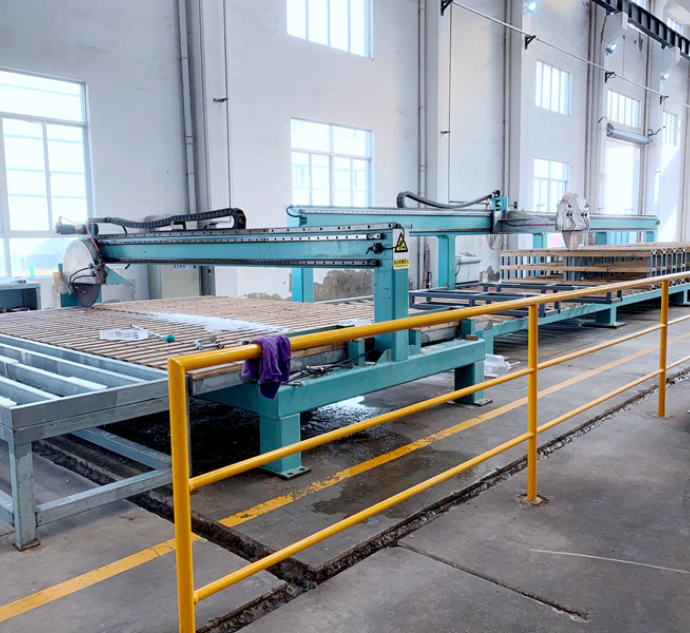
A workshop view of the machine line and the adjacent access area.
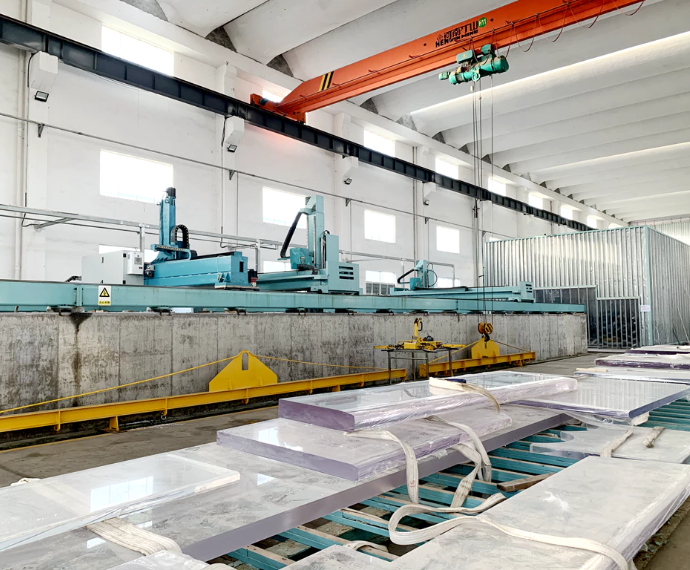
The machining area with acrylic blanks prepared nearby.
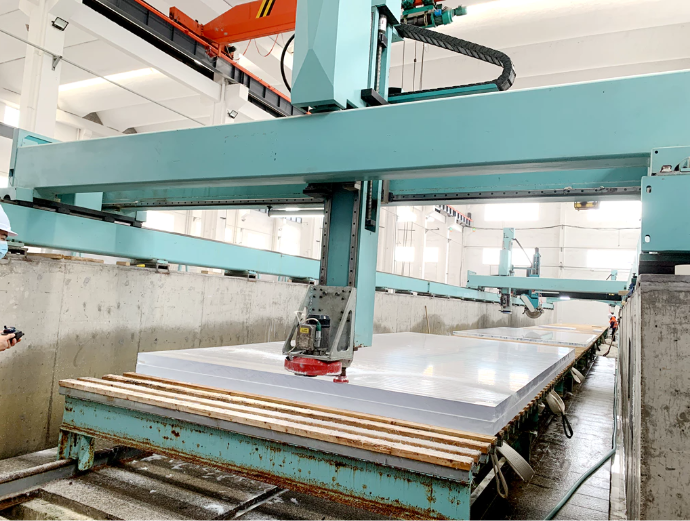
A panel positioned on the bed beneath the machining head.
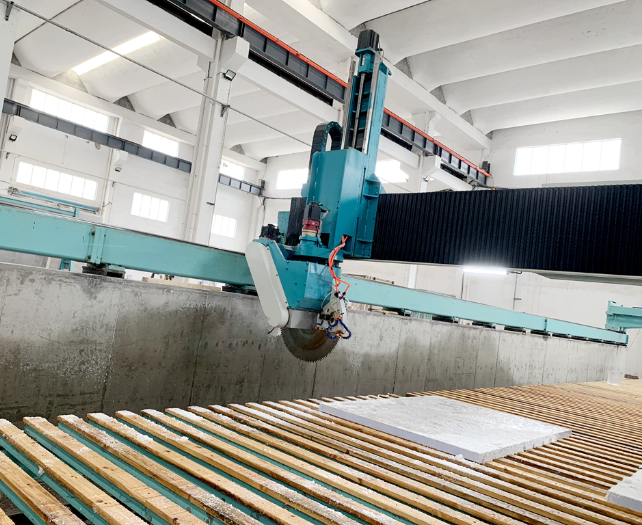
A close view of the spindle assembly and machine bed.
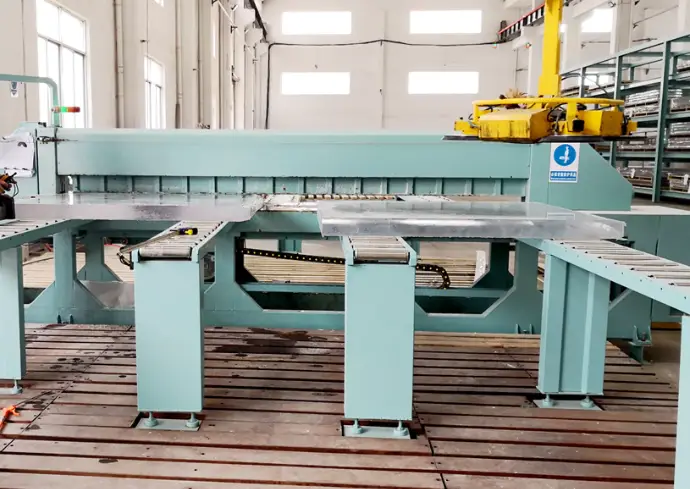
The machine structure and its supported processing area.
From Drawing to Checked Acrylic Part
Drawing and interface review
Confirm the full part size, thickness, profile, edge details and inspection requirements.
Blank and machine setup
Select the blank and suitable equipment, then plan support, workholding and the machining sequence.
Machining the required geometry
Machine the outline and agreed details using a process appropriate to the acrylic and the part.
Check and finish
Review the dimensions and surface condition, then complete the specified finishing and stress-relief stages.
Questions About Acrylic CNC Machining
Which acrylic shapes can you machine?
Our machining shapes include square, round, oval and triangular acrylic sheets, as well as 3D wavy acrylic profiles. Send the required dimensions and drawing so we can review the geometry, material thickness and appropriate equipment.
What machining size and tolerance can you offer?
The usable setup and achievable tolerance depend on the part size, thickness, geometry, workholding and finishing requirements. We confirm these against your drawing before production. A casting-blank size is not automatically the usable machining envelope of every machine.
Is a curved panel made only by CNC machining?
A curved outline cut from a flat sheet differs from bending a panel into a curved form. CNC machining can define profiles and local contours; a panel that needs its whole surface bent may also require thermoforming. The production route is reviewed for the required final shape.
Do machined acrylic edges need polishing?
The required edge finish should be specified on the drawing. An exposed edge may need optical finishing, while an interface prepared for bonding has different requirements. Machining and polishing are coordinated to suit the function of each surface.
Why is stress relief considered after machining?
Machining can introduce local stress into acrylic. Tooling, heat control and workholding are part of the processing plan, and stress-relief annealing is included where required. The treatment and its position in the manufacturing sequence depend on the part and the subsequent operations.
What should I send for a machining quotation?
Please send a dimensioned drawing or model, overall length and width, acrylic thickness, quantity, profile details, holes or edge features, and the required finish and tolerances. For pool and aquarium panels, include the viewing opening, water depth and support arrangement as well.