
Monolithic
acrylic casting.
We turn liquid MMA monomer into solid PMMA blanks for pool windows, aquarium panels and other thick acrylic structures. Forty-five polymerization pools support large-format casting and a working stock of panels, ready for project-specific cutting, machining and finishing.

Material, Capacity & Production Scope
Virgin MMA monomer
100% virgin MMA monomer from Lucite in Shanghai forms the starting material for our cast acrylic panels.
45 casting pools
Polymerization pools in different sizes support panel production and a working stock of acrylic blanks.
UV-stabilized material
UV additives support outdoor use. A 30-year non-yellowing commitment is subject to the agreed written warranty and service conditions.
Single-cast thick sections
One monomer-polymerization cycle produces a continuous acrylic blank, with single-cast thickness available up to 300 mm.
Stock-to-project selection
A suitable existing blank can reduce the need for a new casting run. Availability and processing allowances are checked for each order.
Integrated fabrication
Cast blanks can continue through annealing, CNC machining, polishing, forming or bonding to match the project drawings.
Casting Blank Sizes & Thickness Routes
Available casting formats cover smaller viewing windows through large pool and aquarium panels. The dimensions below are nominal blank sizes; stock availability, trimming allowances and finished dimensions are confirmed for each project.
Up to 300 mm in one casting
The thickness is formed as one continuous section during a single monomer-polymerization cycle.
Up to 800 mm by lamination
Multiple acrylic layers are joined to build a thicker section. The material route and optical requirements are reviewed separately.
| Blank L × W (mm) | Thickness (mm) |
|---|---|
| 1,300 × 2,500 | 20–70 |
| 1,350 × 2,650 | 20–100 |
| 1,450 × 2,700 | 20–100 |
| 1,600 × 2,600 | 20–100 |
| 1,650 × 3,150 | 20–100 |
| 3,200 × 2,200 | 20–110 |
| 3,500 × 1,650 | 20–110 |
| 4,250 × 2,750 | 30–110 |
| Blank L × W (mm) | Thickness (mm) |
|---|---|
| 5,000 × 1,800 | 30–150 |
| 5,500 × 2,100 | 30–150 |
| 6,200 × 3,000 | 50–250 |
| 6,700 × 3,000 | 50–250 |
| 8,200 × 3,000 | 80–250 |
| 8,700 × 3,000 | 80–250 |
| 11,500 × 3,000 | 100–250 |
| 8,100 × 3,700 | 120–300 |
Dimensions are shown in the listed L × W orientation. A thickness range does not mean that every size is held in stock. Final panel thickness is determined by water depth, panel dimensions and support conditions through project-specific engineering review.
From Monomer to Cast Acrylic
Material preparation, mould cleanliness and controlled polymerization all contribute to the finished blank. These production views follow the sequence from raw-material storage to the casting line.
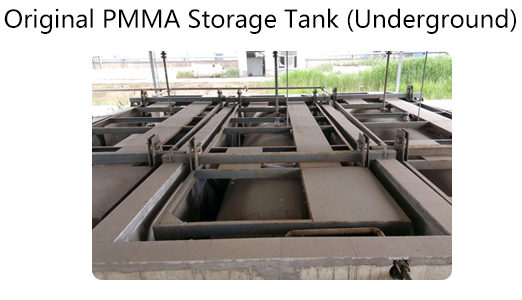
MMA feedstock is held before the material-preparation stages.

Functional additives, including UV stabilizers for outdoor applications, are incorporated into the formulation.
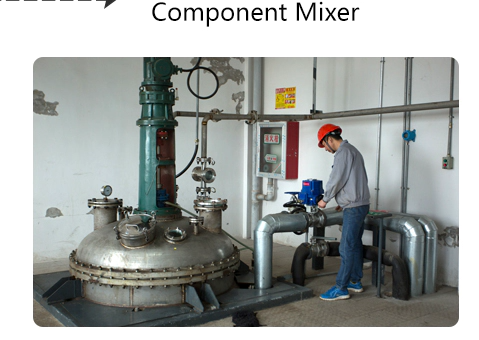
The material and additives are mixed before the prepared feed moves to the next stage.
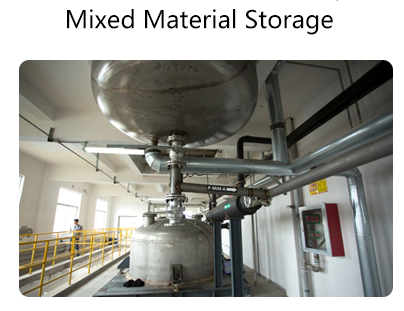
Prepared material is held between mixing and mould filling.
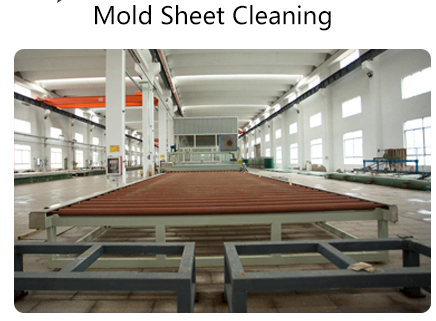
The sheets used to form the casting cell are prepared for assembly.
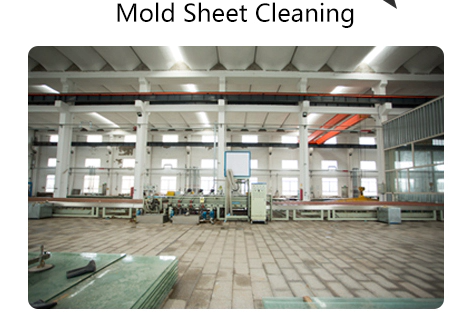
Contact surfaces are cleaned before the mould is assembled and filled.
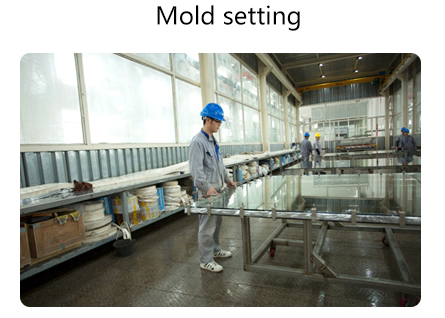
The casting cell is assembled to the required blank dimensions and thickness.
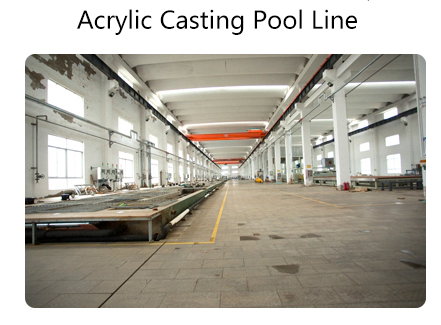
The filled cell is polymerized under controlled production conditions to form a solid PMMA panel.
After polymerization and release from the mould, the panel continues through the stress-relief, inspection and fabrication stages specified for the project.
Inside the Casting Workshop

People beside a thick panel provide a direct reference for its size.

The panel edge and flat surface show the scale of a thick acrylic blank.

A closer view of a thick transparent panel inside the workshop.

The production line accommodates casting cells and handling equipment.
A large rectangular blank supported by a dedicated production frame.

A large panel positioned on a handling platform between factory buildings.

An elevated view of panel platforms, workshop space and overhead handling.

Clear panel blanks and their production supports inside the workshop.

Workshop equipment and overhead access for large-panel operations.
Panel Stock & Workshop Handling
Blank storage and preparation for further processing.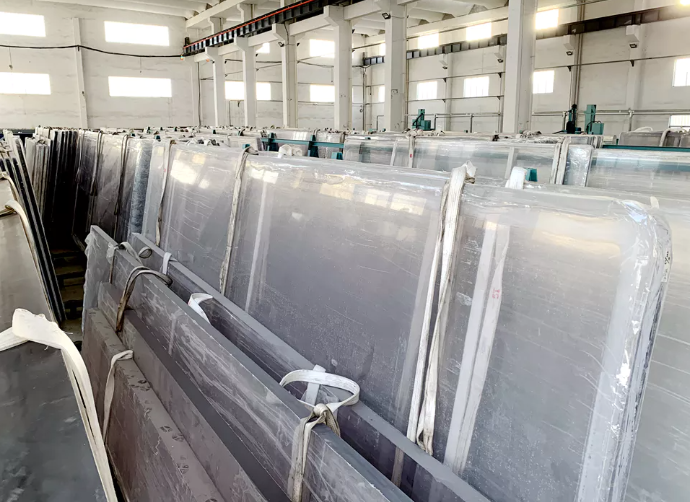
Panel blanks stored upright for subsequent selection and fabrication.
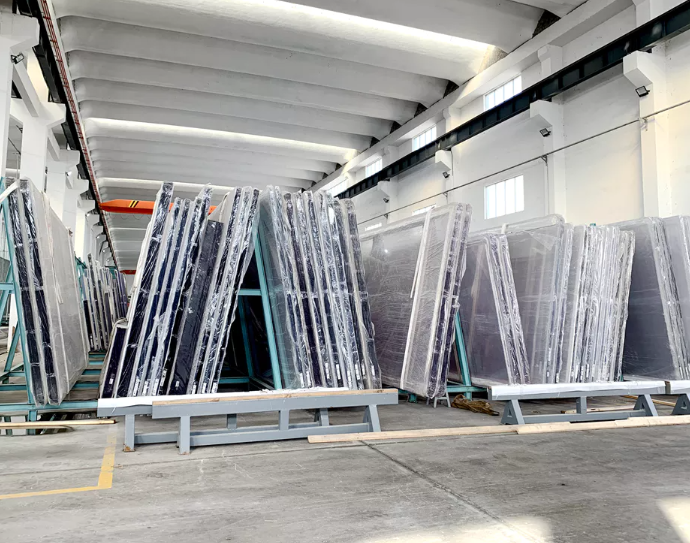
Different blank sizes and thicknesses are held in workshop racks.
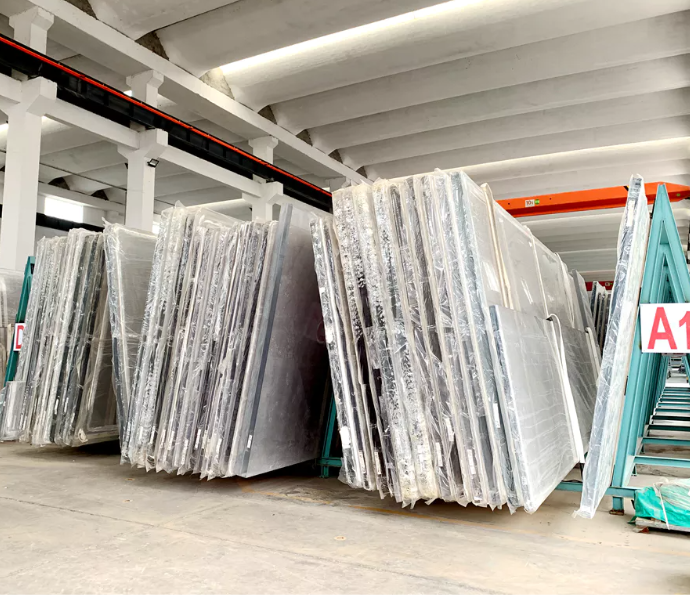
Stored panels await allocation, machining and finishing.
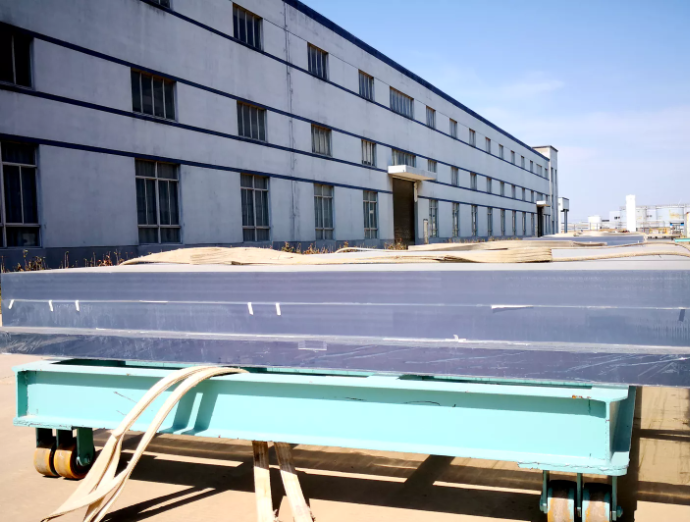
A panel on its handling platform before the next manufacturing or logistics stage.
Checks Before Downstream Fabrication
Quality review covers material traceability, thickness, dimensions and optical distortion. Stress-relief annealing and factory acceptance requirements are included in the manufacturing plan as appropriate to the panel and its application.
Cell-Cast PMMA · Material Reference
- Total luminous transmittance
- 93.2%ASTM D1003
- Haze
- 0.30%ASTM D1003
- Density
- 1.19 g/cm³ASTM D792
Material-level reference values from our technical data sheet. Finished-panel acceptance requirements are confirmed for each project.
Questions About Thick Acrylic Casting
What does monolithic acrylic casting mean?
A monolithic blank is formed as one continuous acrylic section during casting. Liquid MMA material polymerizes inside a casting cell to become solid PMMA. Building thickness by laminating separate acrylic layers is a different production route.
Can you supply acrylic thicker than 300 mm?
Yes. Our single-cast limit is 300 mm, while laminated acrylic sections can be produced up to 800 mm. Required thickness, optical requirements and the proposed production route are reviewed together before an order is confirmed.
Are these blank sizes the finished viewing dimensions?
No. The table lists casting-blank dimensions and thickness ranges. The visible opening is normally smaller than the overall panel because support rebates and installation interfaces occupy part of the acrylic. Machining and finishing allowances must also be considered.
Does a stock blank guarantee immediate delivery?
A suitable stock blank can shorten preparation, but the final schedule also depends on thickness, machining, annealing, bonding, inspection, packing and transport. We confirm available stock and the manufacturing schedule against your project requirements.
What happens after the panel is cast?
The panel is released from the casting cell and moves through the specified stress-relief, inspection and fabrication stages. Depending on the project, this can include annealing, CNC machining, edge finishing, polishing, forming and bonding.
What information is needed to select a blank?
Send the viewing dimensions, overall panel size if known, water depth, support arrangement, panel shape and project location. Tell us whether a single-cast section is required. Our engineering team can then review the thickness and the available production options.