How thick should a pool window be to hold back all that water? Grandview Acrylic has made pool and aquarium acrylic for 20 years. It has learned one simple thing. Acrylic pool window thickness cannot be picked by looks alone.
Thickness depends on the panel size and the deepest water it faces. It also depends on how the panel is held, the load on it and how much it may bend. Each project needs its own engineering review. That review sets the final number.
Grandview Acrylic supplies custom cast acrylic panels. They are used for pool windows, infinity-pool edges and underwater viewing areas.
Acrylic Pool Window Thickness at a Glance
Acrylic pool window thickness is how thick the panel must be to hold the water safely. The size you see does not decide it.
The Five Inputs That Decide Thickness
| Input | What it means |
| Water depth | The maximum depth the panel faces |
| Panel span | The clear distance between supports |
| Support configuration | Three-side or four-side support |
| Loading and allowable deflection | The expected load and how much the panel may bend |
| Safety factor | The margin kept above the bare minimum |
Grandview offers pool window thickness of 40 to 60 mm, 80 to 100 mm and 120 to 200 mm. You can see these on its acrylic pool window page. Custom thickness goes up to 1,000 mm. That needs an engineering and production review first. These numbers show what is offered. They are not a sizing rule.
How Water Depth Puts Load on the Panel
The deeper water is, the greater the pressure in it. So the bottom of the window is heavier than the top. In fresh water, pressure increases roughly 0.433 pounds per square inch for every foot. That is around 9.8 kilo-pascals per meter in metric.
The thickness calculation utilizes the lowest point of the panel. It does not use average depth. The average makes the bottom appear safer than it really is. Grandview explains this in its L-shape pool window thickness and pressure guide.
Panel Span and the Size of the Opening
The open gap between two supports is called panel span. The greater the span, the more it will bend under the same force. So the panel has to be thicker. The danger is added increased by depth and breadth.
How Span and Depth Combine
| Span and depth | Bending risk | Effect on thickness |
| Short span, shallow water | Low | Standard thickness may work |
| Long span, shallow water | Some | May need more thickness or framing |
| Short span, deep water | Some to high | Driven mostly by depth |
| Long span, deep water | High | More thickness plus an engineer’s review |
Stock panels go up to about 3 × 9 m. Custom-cut and bonded sizes are also available.
Three-Side and Four-Side Support Frames
The support frame is the framework that holds the borders of the panel. It determines how the panel supports the load.
Two Common Setups
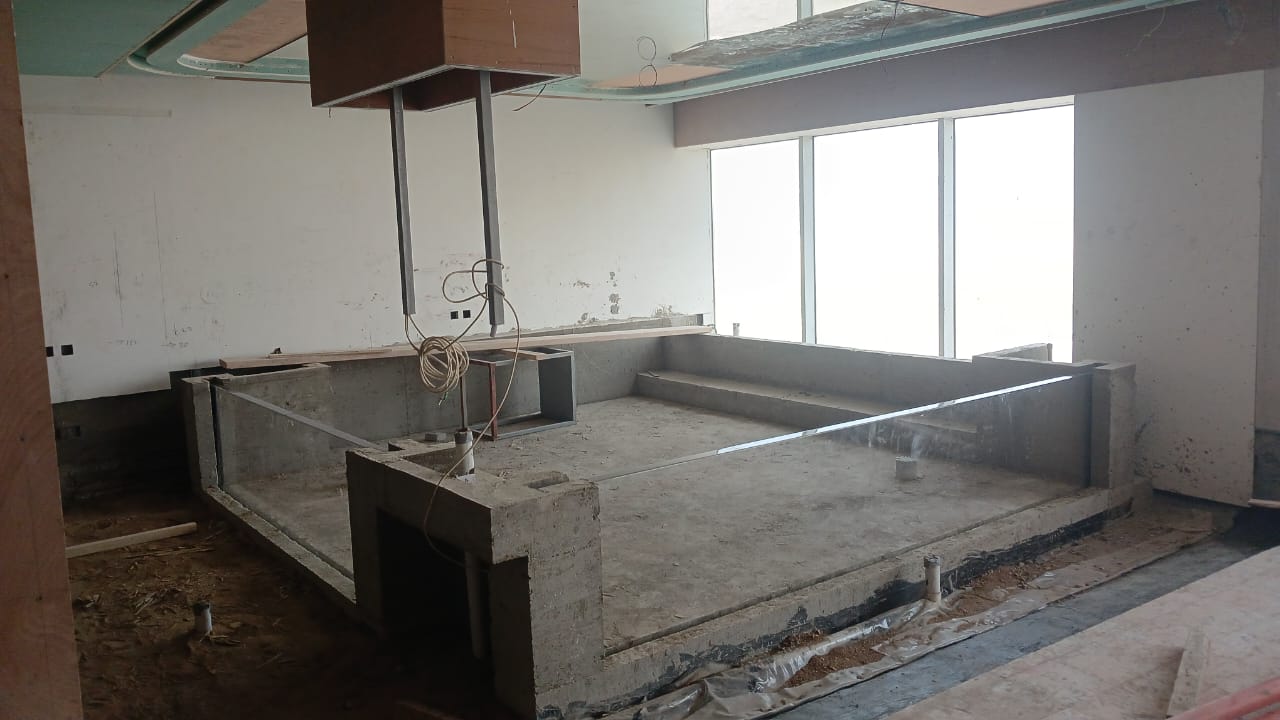
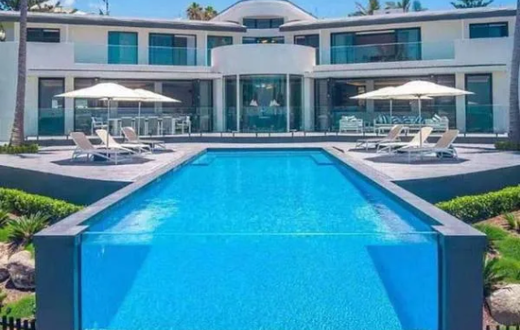
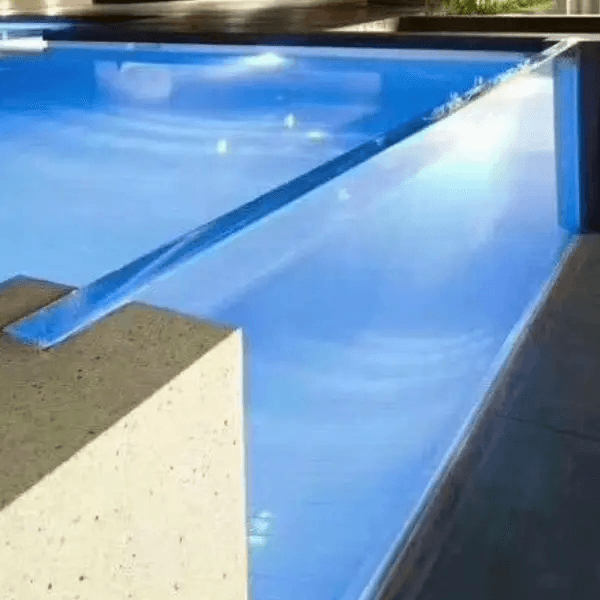
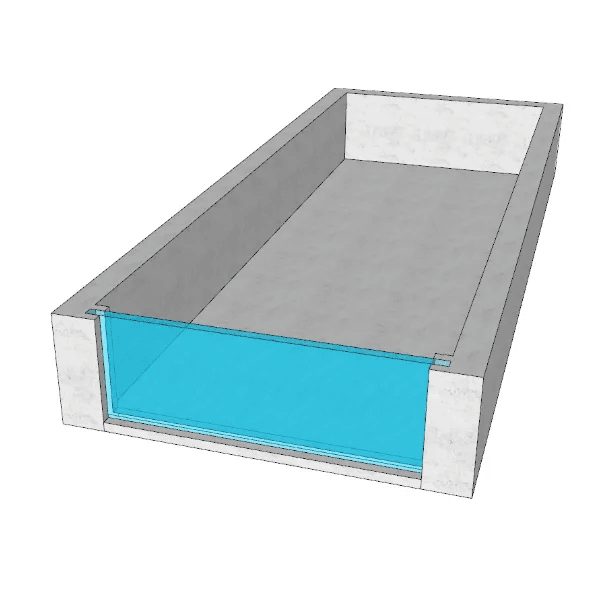
Three-side support: There are rebates (recessed slots) at the bottom and each side in which the panel rests. The top edge is free. Works for pool end panels. It is also suitable for waterfront residences, canal side properties and cantilevered pools. It is also used in wet-edge designs, with an infinity-pool effect.
Four-side support: The panel rests in rebates on all four edges. It is useful if the panel has to be held more securely.
Shop drawings help fit the panel to the concrete or steel structure. This happens before delivery. Grandview also gives installation help, as its installation page shows. The guide covers the size and rabbet construction. It includes pre-installation tests, handling of panels, waterproofing, sealing and maintenance.
What Is Cast Acrylic, and What Are Its Tested Values?
Cast acrylic is PMMA created by mass polymerization of the monomer. This is how Grandview creates its cast PMMA. The source ingredient is virgin MMA, from Lucite. All machined acrylic items are annealed (heat treated) to alleviate stress. The monolithic casting page covers the casting step.
Tested Values for Grandview Cast Acrylic
| Property | Value | Standard |
| Tensile strength | 80.0 MPa | EN ISO 527:2012 |
| Tensile modulus | 3150 MPa | EN ISO 527:2012 |
| Flexural strength | 120 MPa | ISO 178:2013 |
| Water absorption | 0.20% | ISO 62:2008 Method 1 |
| Vicat softening temperature | 103°C | ISO 306:2013 Method B50 |
From FEA Calculation to Final Panel Size
The FEA calculation forecasts the stress and bend a panel will undergo. It employs the depth, span and the support. FEA means finite element analysis. Grandview recommends the thickness for this.
The Steps in Order
- The buyer gives the length, breadth, height and waterlevel. Help from design drawings.
- Grandview does 3D drawings, and tests the force and stress using finite element analysis. Then it suggests the thickness and sketches the installation details.
- Production begins. Grandview cuts, binds, bends, and polishes the panel. Then quality checking, packaging and shipment.
Grandview offers engineering services such as 3D design, ANSYS and deflection testing. They also comprise engineering of packaging frame. Other services describe the way acrylic changes under water pressure and gravity. They also cover the maximum primary stress of acrylic. The design and engineering page lists them all. Final advice depends on the size, water depth, support method and structural details you send.
Why Is a Safety Factor Needed?
A safety factor is additional thickness beyond the basic requirements. All pool window designs have one. It covers wear and tear over time, variations in heat and cold, minor construction faults and the gradual bending of acrylic under persistent stress.
Grandview’s L-shape guidance typically ranges from 3 to 4. The precise amount will be determined by local pool safety rules and the engineer’s inspection. The ultimate thickness must be checked by a professional engineer.
Which Mistakes Make a Window Too Thin?
Four Errors to Avoid
- Use average depth not deepest point.
- Ignore the engineer’s check Believe a supplier chart
- Forget sluggish bending, time-dependent heat fluctuations.
- Omitting the support technique, thickness or safety factor from the designs.
What Should You Know About Factory Scale and Delivery?
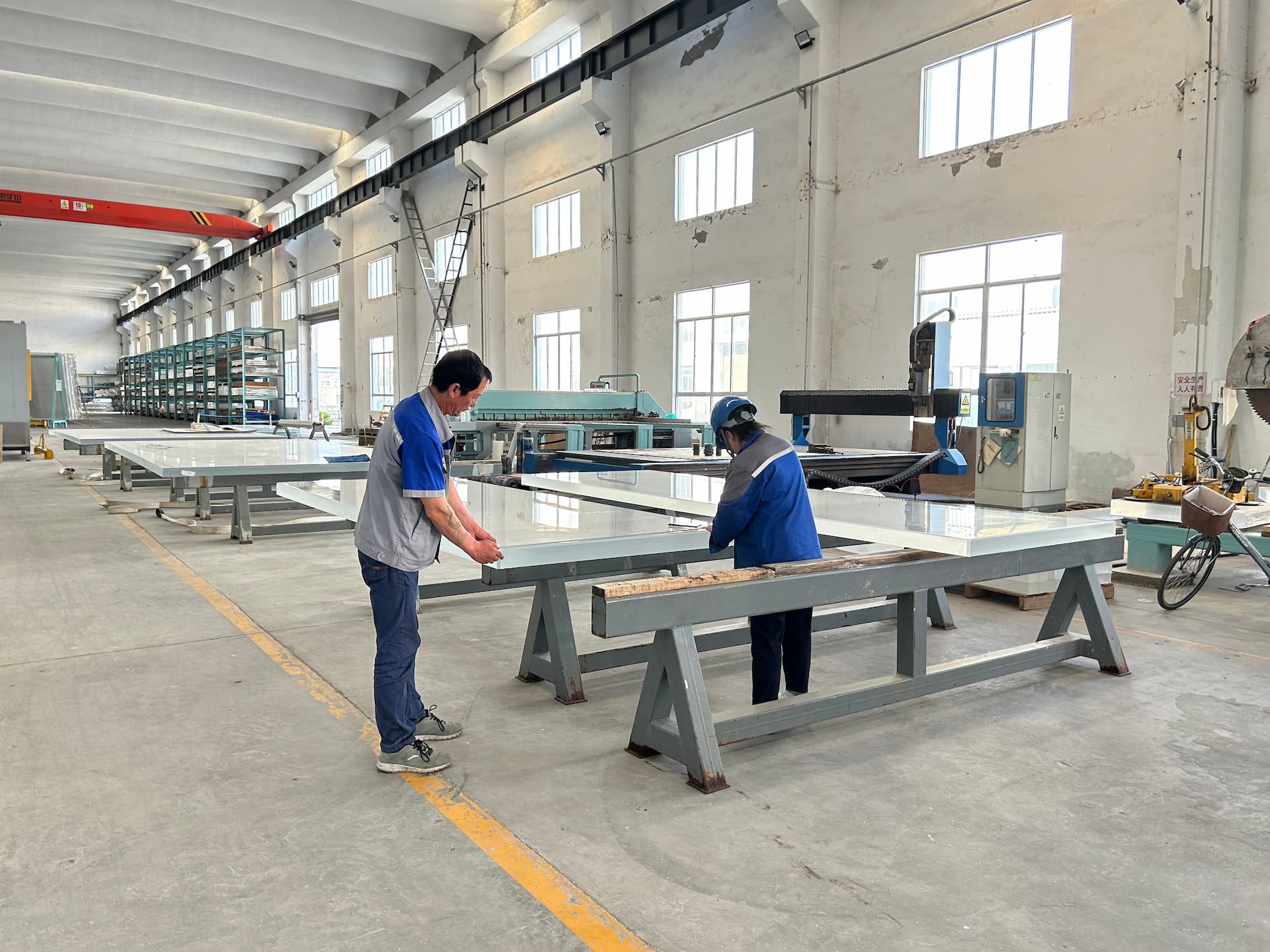
Grandview Acrylic is a China pool and aquarium acrylic manufacturer. With 20 years of experience. The whole process of producing panels is done under one roof.
The plant contains 45 tanks for the casting of monomer and 100 qualified personnel. The largest single pour is 300 mm. Buyers may request material samples to confirm clarity and texture. Material test results are also accessible. And CE, SVHC, California Prop 65 and CPSIA docs are too. Which ones you receive depends on what the product is.
Ships in 7-10 days on standard flat panels. This is based on stock, machining, edge finishing and final specs. Bonded panels and specific machining take longer. Buyers are also kept informed throughout manufacturing. The About Us page and the Quality Control page cover the company and its checks.
What to Send for a Thickness Review
Grandview needs six details to review the thickness:
- The viewing length and height of the panel
- The maximum water depth
- Three-side or four-side support
- Pool drawings or structural details
- How many panels you need
- The country and place of the project
Send your drawings on the Get A Quote page. Grandview will do a preliminary technical review and give a quote within 24 hours.
FAQs
How thick should an acrylic pool window be?
It depends on the panel size and the deepest water it faces. It also depends on how the panel is held, the load and how much it may bend. Grandview offers 40 to 60 mm, 80 to 100 mm and 120 to 200 mm. Custom sizes need a review. An engineering review of your project sets the final choice.
How is acrylic thickness calculated?
Engineers use finite element analysis. It tests the force and stress from water pressure and gravity. They check how much the panel bends and its max principal stress. Then they add a safety factor. They need the panel size, water depth, support method and structural details.
Does water depth affect acrylic thickness?
Yeah. Pressure increases with depth, around 0.433 psi per foot of depth in fresh water. The math utilizes the deep point of the panel. The largest load is at the bottom edge.
What safety factor is used for acrylic pool panels?
The safety factor is the additional thickness over the minimum. Grandview’s L-shape guidance is often between 3 and 4. The actual quantity will rely on local regulations and the engineer’s inspection.
Can the window be made to custom dimensions?
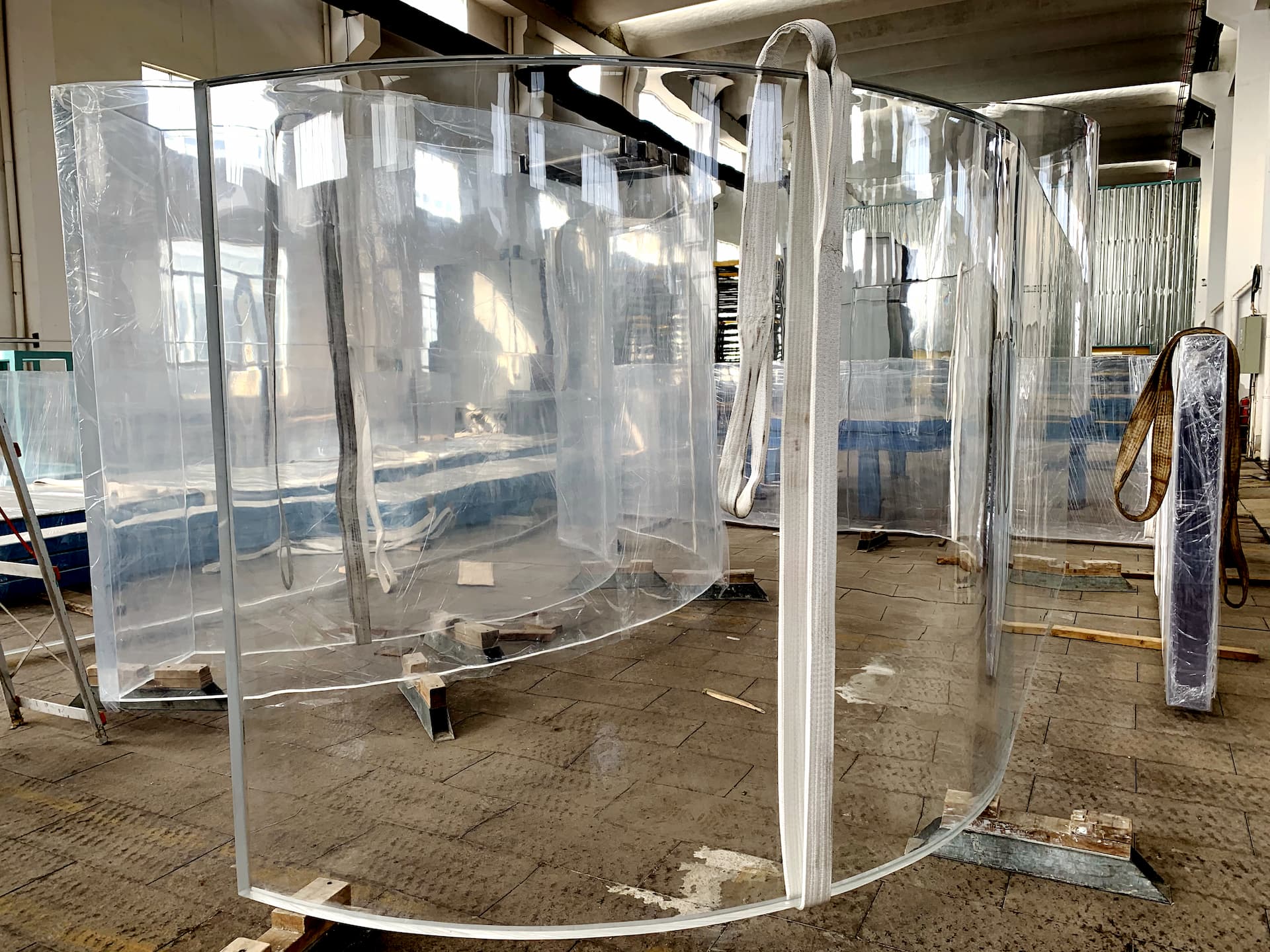
Yah. You may choose the length, height, thickness, form and edge finish. First of all, Grandview will inspect your project plans, the viewing area, the support structure and the water depth. It will create flat, L, U, curved and cylindrical panels.
Can a local contractor install the window?
Yeah. Grandview provides shop drawings and assistance to a local contractor. The advise includes rabbet, tests before to installation, panel handling, waterproofing, sealing and maintenance. On-site assistance may also be provided. It is contingent upon the location, the timeline, the site circumstances and the specified scope.
Conclusion
Every panel is determined by five things: depth, span, support, load and safety margin. The final value should be checked by a professional engineer.
If you need a custom panel, Grandview Acrylic is a good place to start. It casts and machines panels in its own factory. It also offers 3D drawings, finite element analysis, shop drawings and installation help. Send your drawings on the Get A Quote page to get your acrylic pool window thickness checked. The panel itself is on the acrylic pool window product page.