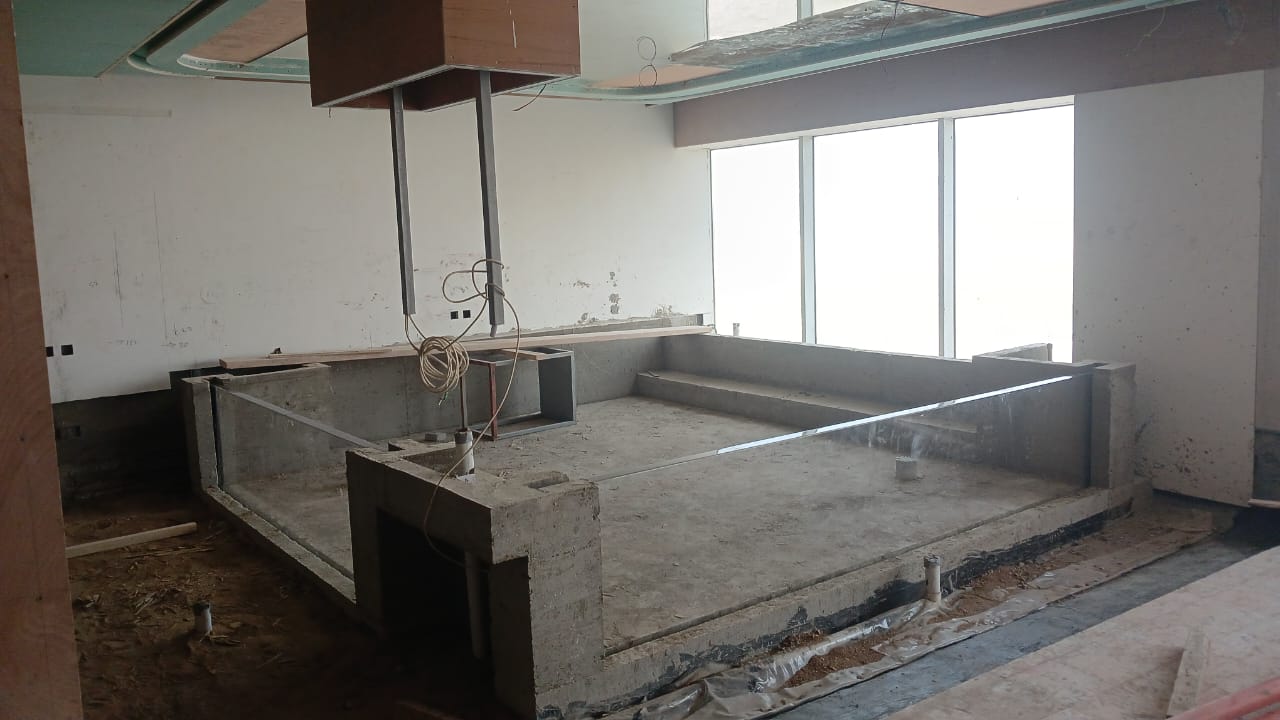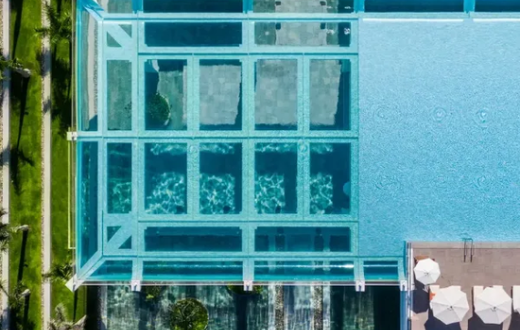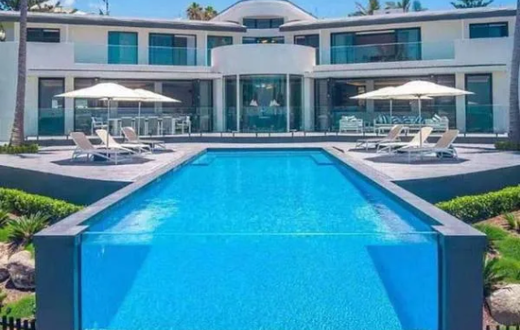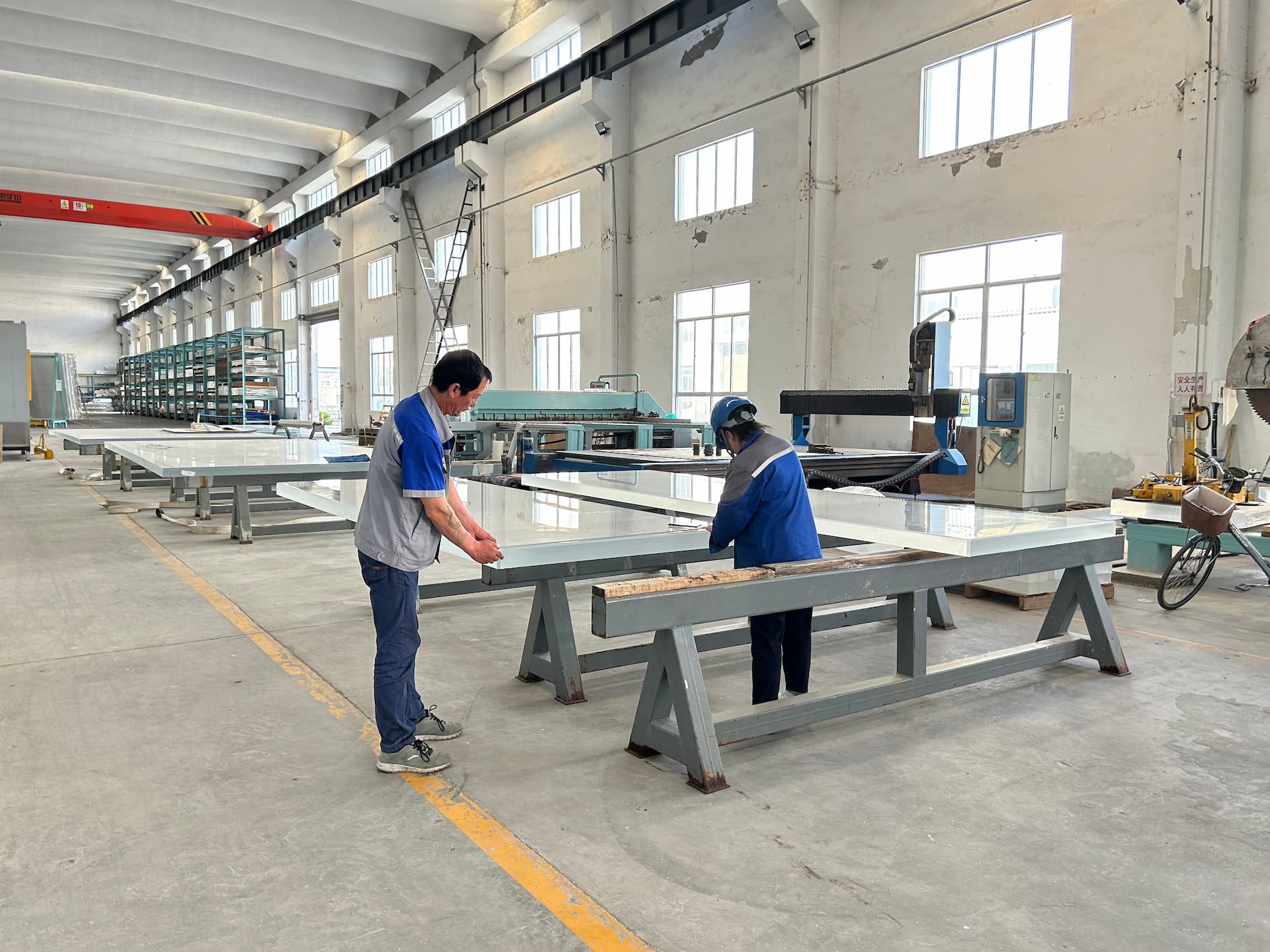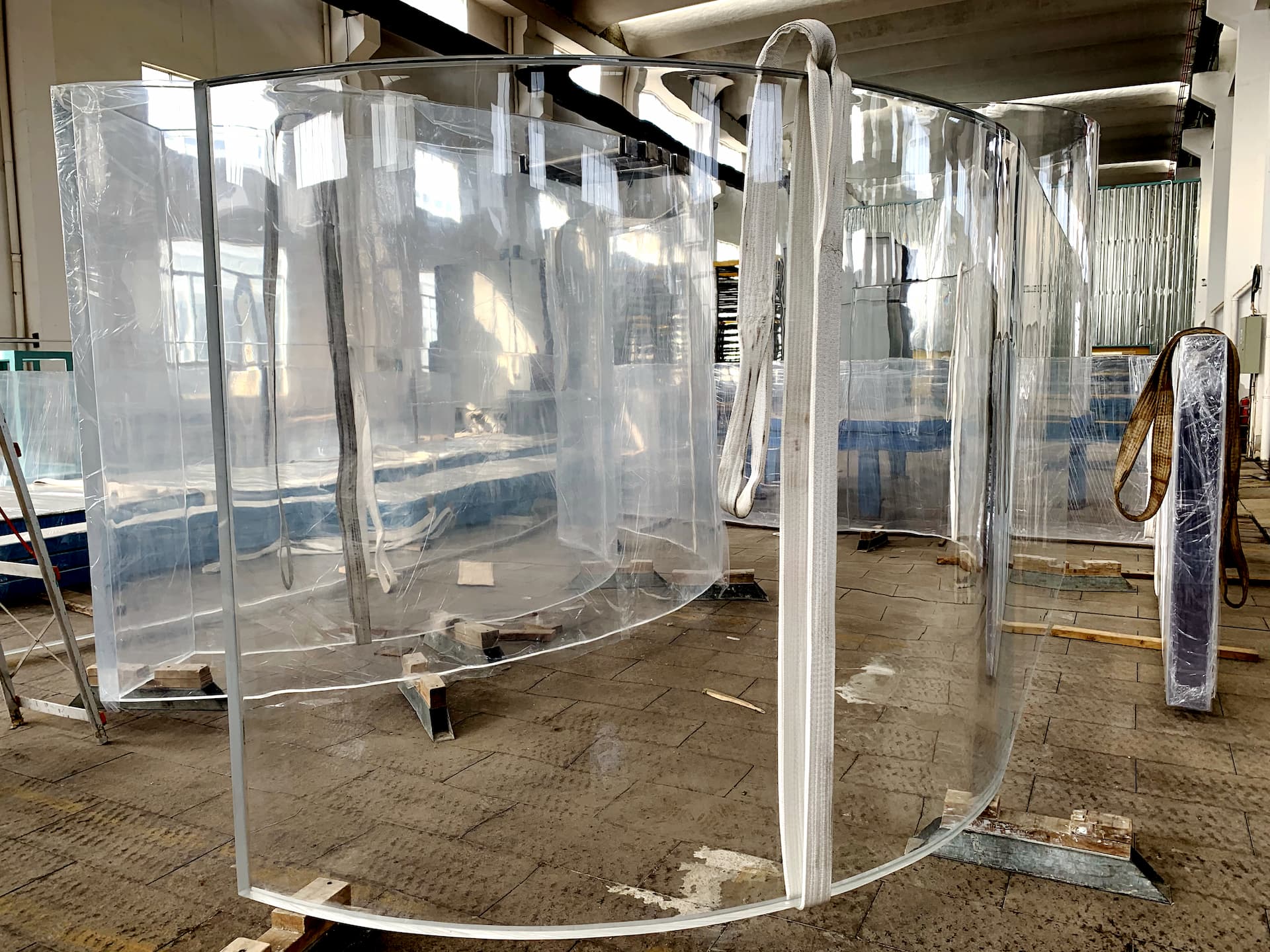
The thickness of an acrylic L shaped pool window depends on 3 things. First, the water pressure at the lowest point of the panel. Second, the open span between supports. Third, there is a safety factor applied to the acrylic’s strength rating. The corner shape is one more factor. An acrylic L shape pool window has more stress at the inside corner than a flat panel does, so a flat-panel chart won’t give you a safe number for this shape.
This matters because pool windows are holding back real water. A panel can look good on paper but it can fail if the corner stresses are not considered.
Quick note prior to proceeding: this guide will explain how the calculation is done and the factors used.
What Is an Acrylic L Shape Pool Window?
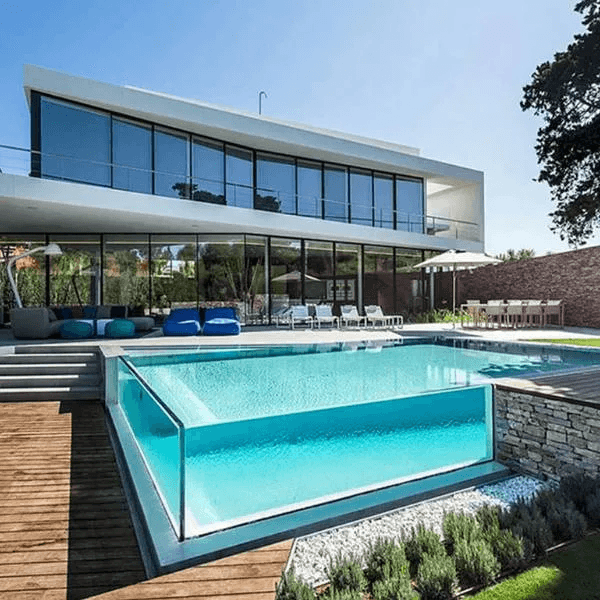
An L shaped pool window made of acrylic is a clear panel shaped like the letter L. It’s inside a pool wall, around the corner. This allows people to look into the pool from two sides simultaneously, not just one flat wall. For this reason this shape is very common in L-shaped pool designs, as the pool already has a corner to build around.
Acrylic L shape pool windows are also common in L-shaped pools for small yards. It gives a big view without requiring a long flat wall. Builders also plan L shaped pool dimensions around this corner, so the window complements the pool’s layout from the start.
Key Facts at a Glance
| Feature | Typical Detail |
| Material | Cast acrylic (PMMA) |
| Shape | Two flat sides that meet at a corner |
| Common use | Home and public viewing pools |
| Key design challenge | Extra stress at the corner |
| Main factor | Water depth and open span |
Why the L-Shape Corner Changes the Math
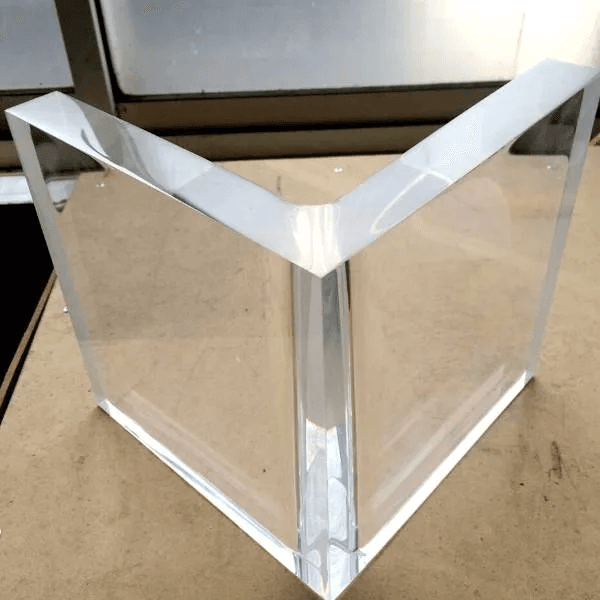
An inside corner of an acrylic L shaped pool window behaves differently than a flat panel of the same size. On a flat window the water pressure is evenly distributed. In an L-shaped window, both sides push the load into the corner. That corner is the most stressed point on the entire panel.
This is why an L-shaped pool window kit will almost always need more thickness, or additional support in the corner. This is even at the same water depth as a flat panel. The common and expensive mistake is to treat the corner just like any other edge.
Hydrostatic Pressure: Where the Math Starts
Water pressure increases as depth increases. In fresh water , the pressure is about 0.433 pounds per square inch per foot of depth. That’s about 9.8 kilopascals per meter in metric units. This means that the bottom of an acrylic L shape pool window has to carry a lot more load than the top.
Thickness math is calculated on the deepest point on the panel and not an average depth. The average would make the bottom of the window appear safer than it is.
Span and Support: How Panel Size Changes Thickness
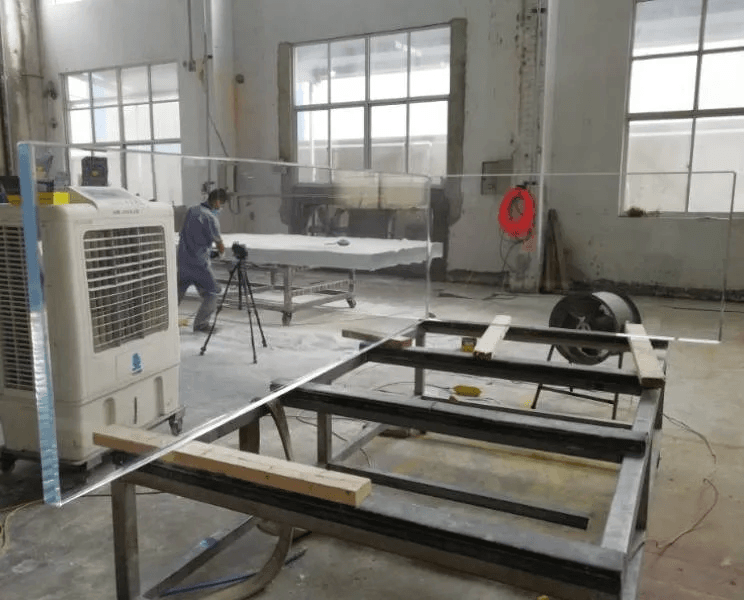
Span is the clear distance between two supports. The longer the span , the more it bows to the same water pressure . The longer the span, the thicker the panel must be to be safe.
L shaped pool window dimensions and L shape pool window plans will list the lengths of both wings separately and the corner span, not just one total size. A plan with only the outer width can conceal a wing that is too long for its intended thickness.
Span vs. Depth: How They Combine
| Span Type | Bending Risk | What It Means for Thickness |
| Short span, shallow water | Low | Standard thickness may work |
| Long span, shallow water | Some | May need more thickness or framing |
| Short span, deep water | Some to high | Thickness driven mostly by depth |
| Long span, deep water | High | Needs more thickness plus an engineer’s review |
Safety Factor: Why the Bare Minimum Is Never Enough
Safety Factors is additional thickness over and above the bare minimum. Pool window plans always have one. It takes into account wear over time, heat and cold variations, minor building errors and the slow bending of acrylic under constant pressure.
The L-shape corner is even more important to have the extra margin. The corner is already under more stress by itself. So there is less room for error in the design or construction.
Factors That Go Into an L Shape Pool Window Thickness Calculation
There is a lot of thickness math that goes into an acrylic L shape pool window. The main ones here are:
- The panel’s deepest spot
- The open span of each wing of the L-shape
- The stress caused by the corner angle
- The acrylic grade strength classification
- The safety factor required by local swimming pool safety codes
- Sun, heat, pool chemicals, etc. (external factors)
Acrylic L Shape Pool Window Kit: What’s Typically Included
A typical acrylic L shape pool window kit will contain the acrylic panel, frame or mounting parts, and a sealant for constant water contact. Some kits also include paperwork by an engineer.
That’s important paperwork. It should indicate the exact thickness and safety factor used, not just the size of the panel. Without it, you can’t confirm that the panel was designed for the actual depth of your pool.
L Shape Acrylic Pool Window Installation
A poorly constructed panel can be ruined if the frame does not hold an Acrylic L shape window evenly. Point loading, the application of uneven pressure, introduces stresses not present in the original model.
Good Acrylic L shape pool window installation distributes the support evenly all round the frame including the corners. The sealant gaps have to be what the engineer set as well. If the gap is too tight or too loose, it alters the way in which the load enters the frame.
L Shape Window Drawing: What Should Be on the Plan
A full L shape window drawing for an acrylic L shape pool window includes the length of both wings, the angle of the corner, the deepest point of the water, the finished thickness, the grade of the acrylic and the safety factor used. Any of these removed from the plan usually produces a panel that’s too thin.
The acrylic L shape window design plans without clear corner angle are risky. That one detail changes the way stress accumulates at the joint.
Common Mistakes in L-Shape Pool Window Planning
In L shaped pool window projects few mistakes are repeated. Early detection saves time and money down the road.
- Chart for corner window, flat panel
- Measure the full opening, not each wing separately
- Skirting the engineer’s check because the supplier’s chart looked okay
- Ignoring long-term effects such as slow bending and heat changes
Frequently Asked Questions
- How to Determine Acrylic Pool Window Thickness
The thickness of an acrylic pool window is based on the deepest point of water, the open span, the strength of the acrylic and a factor of safety. For L-shape panels, the corner provides one additional input. For any real project the final number should be validated by a licensed engineer.
- Why are L-shape pool windows figured differently than flat windows?
The L-shaped windows in the pool require a different calculation because the inside corner has more stress than a flat panel. Load pushes to that one point from either side. That usually means more thickness or more support at the corner.
- At what water depth is the pressure calculated?
This is the math based on the deepest point on the panel, not an average depth. The water pressure increases with depth, so the bottom always carries the heaviest load. If you use less than the true deepest point the panel will appear safer than it actually is.
- Acrylic pool window safety factors are typically between 3 and 4.
Acrylic pool windows have a safety factor much greater than the minimum thickness requirement. The precise number is subject to local codes and the engineer’s review of long-term load. Water pressure, heat and the slow bending of acrylic all have a bearing on this, so the final number is determined by reviewing the specific project.
- What should go into a plan for installing an acrylic pool window?
The plan of installation should mention the panel’s thickness, the dimensions of wings and corners, the grade of acrylic, the safety factor and the support of the frame for the panel. It should also tell you the size of the sealant gap. If any of these are missing it will be hard to verify the work later.
- Yes, you can use a normal rectangular window chart for a L shape design.
No, a regular flat-window chart does not account for corner stress. L-shape panels need a math that treats the inside corner as a separate load point. A flat-panel chart runs the risk of a panel that is too thin, exactly where it needs the most strength.
Conclusion
The thickness of an acrylic L shape pool window is determined by depth, span, corner shape and a safety factor added to the strength rating of the acrylic. None of these should be the answer. Before you build or install anything, check the final thickness and safety factor with a licensed structural engineer according to local pool safety codes.
If you’re sourcing panels or kits for a project like this, Grandview Acrylic is worth a look. They use real panel measurements, not generic charts, which is the kind of detail an L-shaped corner window really needs.