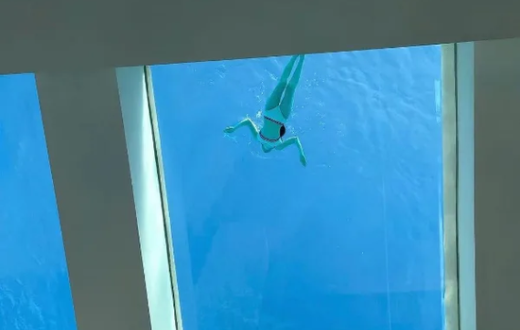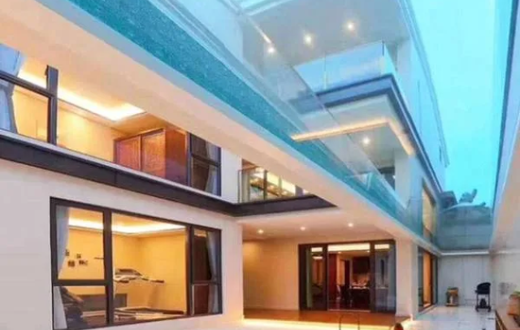
The properties of cast acrylic, per Grandview Acrylic’s data sheet, start with a density of 1.19 g/cm³. Its tensile strength is 70.6 MPa. Its flexural strength is 106 MPa. Its total luminous transmittance is 93.2%. That is the share of light that passes through. Its Vicat softening temperature is 113.9°C.
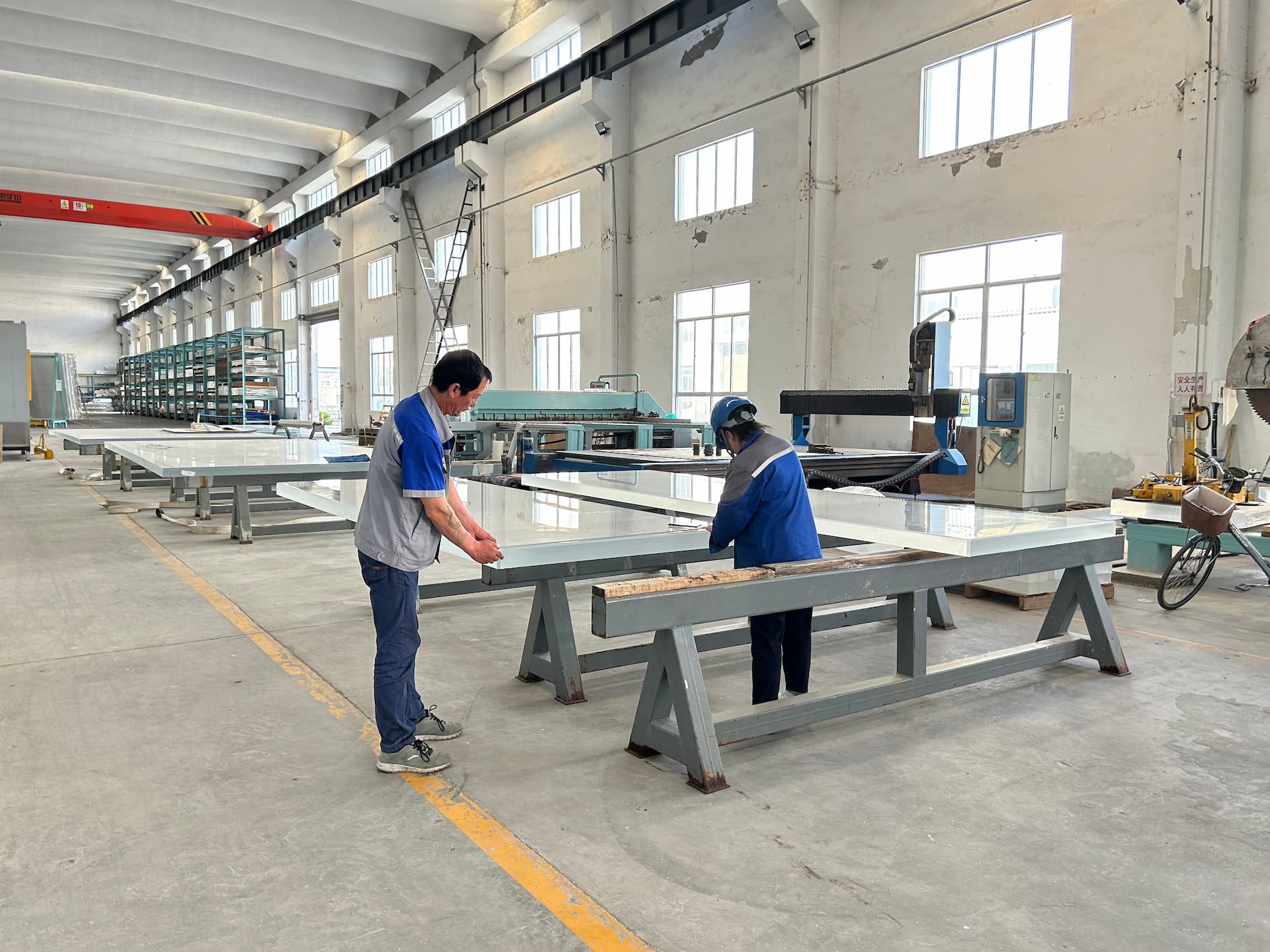
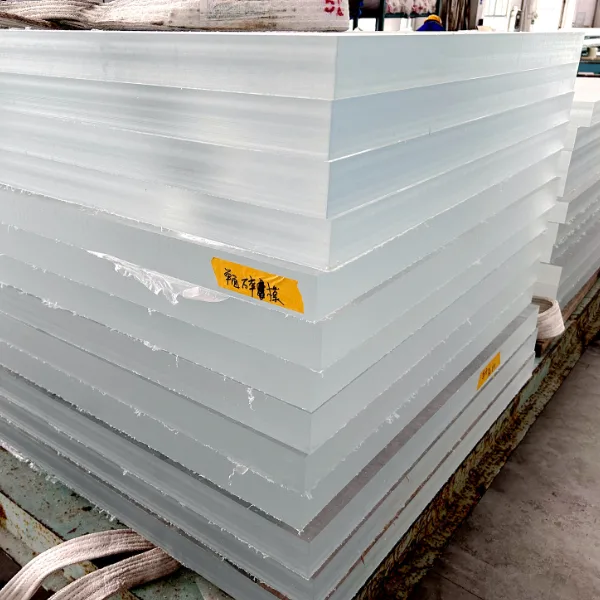
The material is cell-cast PMMA. It comes in thick stock from 20 to 300 mm. Grandview makes acrylic for pools and aquariums. The factory has 20 years of experience.
Properties of Cast Acrylic at a Glance
Grandview Cast Acrylic Reference Values
| Property | Reference value | Test standard |
| Density | 1.19 g/cm³ | ASTM D792 |
| Total luminous transmittance | 93.2% | ASTM D1003 |
| Haze | 0.30% | ASTM D1003 |
| Vicat softening temperature | 113.9°C | ASTM D1525 |
| Tensile strength | 70.6 MPa | ASTM D638 |
| Flexural strength | 106 MPa | ASTM D790 |
| Light ageing, 5000 h xenon-arc | Grey scale 4-5, no visual yellowing | ISO 105-A02 |
These numbers come from Grandview’s data sheet. Use them to compare materials and to plan early. A lab number alone does not decide the shape, the load or the fit of a part.
Four values are not in the table. They are flexural modulus, refractive index, thermal expansion and water absorption.
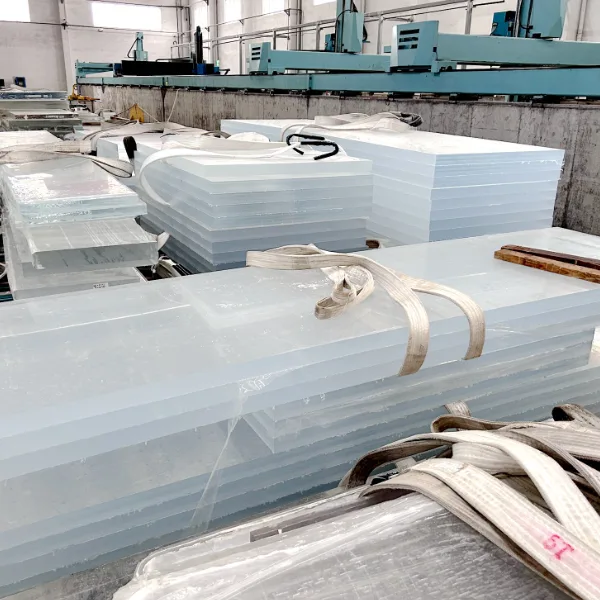
How Cast PMMA Is Made and Why It Matters
PMMA, a clear plastic, is what cast acrylic is made of. It manufactures it in the factory. Casting. This approach is known as bulk monomer polymerization. Grandview employs 100% fresh MMA monomer. It is from a Lucite plant in Shanghai. The blend also features UV-blocking ingredients. The plant contains 45 tanks for casting.
The thickness of a sheet produced may be up to 300 mm with one casting. Lamination up to 800 mm possible. “Grandview has produced an 800 mm sheet for public aquarium windows. Don’t confuse these two digits. The 800 mm sheet is not a single pour.
Where Is Cast Acrylic Used?
Thick cast acrylic is suitable for parts that need depth, a clear appearance and a polished finish.
Common Uses of Thick Cast Acrylic
- Architectural features in buildings
- Display parts that need a clear, solid look
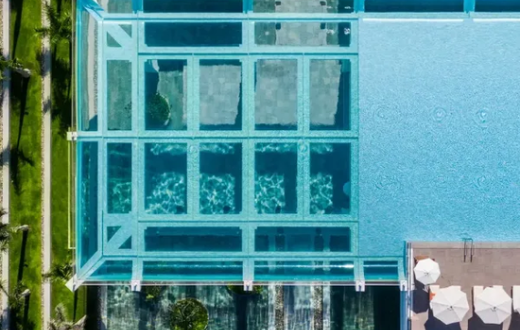
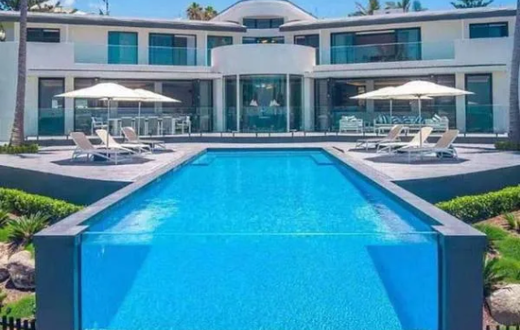
- Water features, and pool and aquarium parts
- Prototypes and custom industrial parts
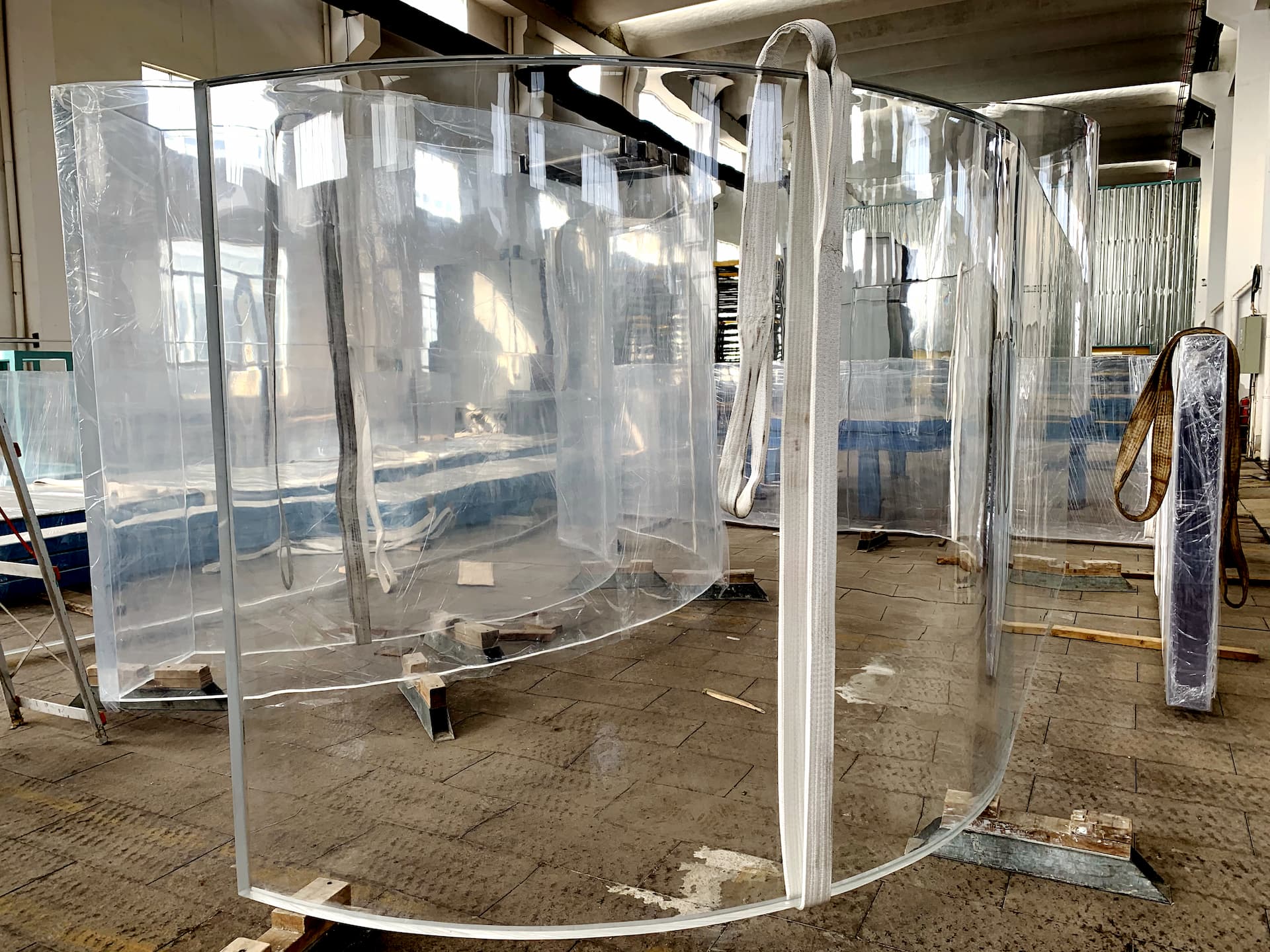
Thick stock allows for more room for cutting. Holes, slots, recesses, and curved edges may be cut from the solid material. A block may be chopped, CNC machined, drilled bonded, and polished. The work should be done in accordance with authorized designs.
Parts for use with water (pool and aquarium): purchasers could inquire about water absorption. This is not in the published table.
Density: What 1.19 g/cm³ Means in Practice
The density of Grandview’s cast acrylic is 1.19 g/cm³, tested to ASTM D792. Density is mass divided by volume. In SI units, this equals 1,190 kg/m³.
A block of 1 m × 1 m × 100 mm has a volume of 0.1 m³. It weighs about 119 kg. This is straightforward math from the density given. Grandview claim? Not. The website claims lightness as one of the material’s qualities.
Tensile and Flexural Strength Explained
Tensile strength: 70.6 MPa (ASTM D638)
Tensile strength is the amount of force a material can withstand before breaking.
Flexural strength: 106 MPa (ASTM D790)
Flexural strength is the ability of a substance to resist bending.
The published table does not include flexural modulus. It is a measure of how stiff the material is. If stiffness is important in your design, ask for it.
Grandview does a stress study termed finite element analysis. It utilizes this to propose the thickness. The Vicat softening temperature and tensile strength of each batch are also tested.
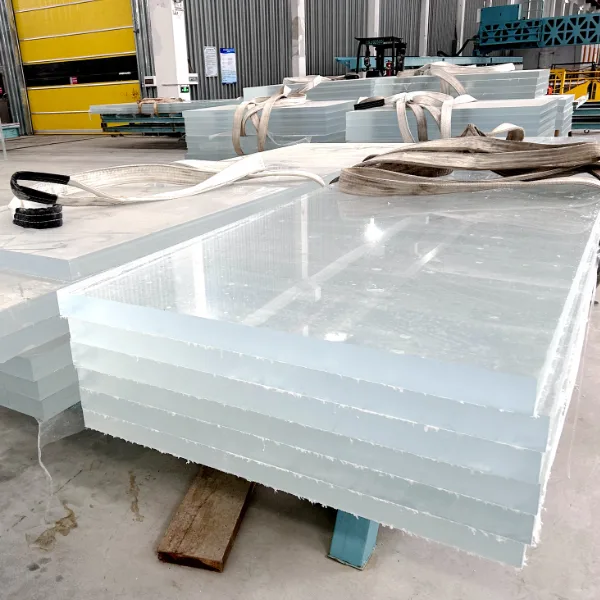
Light Transmittance, Haze and Clarity
Transmittance and haze
Grandview’s cast acrylic has a total luminous transmittance of 93.2%. 0.30% haze. Both pass ASTM D1003 test. Light transmittance. Fraction of transmitted light. Haze is the scattering of light that causes the hazy effect.
Refractive index: none published. If your design needs to bend light, ask for it.
What the visual quality limits say
- One square meter might contain one big stain and two little ones. Or it might have 4 little spots.
- Stains should be a minimum of 150 mm apart.
- Large stains must be a minimum of 300 mm apart.
- A large stain is 1-3 mm². Small stains are 0.3-1 mm².
- Large bubbles are 0.5-2 mm². Small bubbles are 0.3-0.5 mm².
- Bubbles work the same way as stains.
The examinations also include optical distortion. That means a curved perspective across the sheet.
How polishing helps clarity
Step one is sanding to get a clear surface. Grandview sands in stages. It begins at 60 mesh and goes to 1500 mesh. The greater the number the finer the sand paper. Then it rubs the surface with wax that originates from Germany. Workers polish every inch.
Vicat Softening Temperature and Heat Limits
Vicat softening: 113.9°C (ASTM D1525)
The Vicat softening temperature is the temperature at which plastic begins to soften. Grandview lists 113.9°C. This is a test number. Not a safe operating limit.
Light ageing after 5000 hours
The data sheet indicates a 5000 hour Xenon-arc test. The test standard is ISO 105-A02. The end result is gray scale 4-5. No apparent yellowing.
Grandview also has a 30-year outdoor warranty. It states the anti-UV substance changes color somewhat. It states there’s no yellowing or cloudiness. Do not turn the 5000 hours into years.
Thermal expansion not available If you are planning lengthy panels ask for it. A panel becomes longer in the heat.
Thick Cast Acrylic: Sizes and Thickness
The stock list runs from 20 to 300 mm thick. Stock can change. Confirm your size before you ask for a quote.
Stock Size Reference
| Length × width (mm) | Thickness (mm) |
| 1300 × 2500 | 20-70 |
| 3200 × 2200 | 20-110 |
| 6200 × 3000 | 50-250 |
| 8100 × 3700 | 120-300 |
Grandview verifies final size, thickness, finish and size correctness on every order. Drawing with dimensions locks in a quotation. A little drawing might also initiate the evaluation. It should be the whole size, the form, the faces to polish and how many you need.
How Grandview Checks These Properties
Each batch is tested for Vicat and tension. Annealing of machined parts. This will relieve the tension from the acrylic.
Why annealing matters
During machining, acrylic stress increases. The annealing is carried out in a heat-controlled oven. The heat increases gradually and remains constant. Slow, uniform cooling. Only parts that have cooled below 50°C exit the oven.
“Final checks are made for thickness, size, the visible surface, and optical distortion” They also look at the stress reduction process.
Factory Facts
| Item | Detail |
| Casting tanks | 45 |
| Monthly capacity | 8000 tons |
| Skilled workers | About 100 |
| Factory area | Over 20,000 m² |
| Lead time | 7-10 days |
The factory has a quality system. It follows ISO 9001:2000 standards. The factory also has RoHS and CE certification.
Data Sheet Items to Request Before Buying
Grandview’s published table leaves out four properties of cast acrylic. Each one helps with a real design choice.
Four Items to Ask For
- Flexural modulus: shows how stiff the material is. It helps when sag matters.
- Refractive index: shows how the material bends light.
- Coefficient of thermal expansion: shows how much the size changes with heat.
- Water absorption: shows how much water the material soaks up.
You can ask Grandview for a free sample. It promises a quote within 24 hours. To get a quote, send the project type, panel size, water depth, quantity and any drawings. Ask for the four missing values in the same message.
FAQs
What are the properties of acrylic?
Grandview cast acrylic has a density of 1.19 g/cm3. It has a tensile strength of 70.6 MPa. Flexural strength 106 megapascals. Total light transmittance is 93.2%. Its Haze is 0.30% It has a Vicat softening temperature of 113.9°C. These figures came from its data sheet.
Is acrylic stronger than glass?
Depending on thickness, support and load. A simple yes or no might be deceptive. For its cast PMMA, Grandview quotes tensile strength of 70.6 MPa and flexural strength of 106 MPa. Nothing will compare with glass. “The safe load is not just a lab number. Grandview does a stress testing to recommend the thickness.
What is the density of acrylic?
Grandview’s cast acrylic weighs in at 1.19 g/cm3. Tested according to ASTM D792. This is 1190 kg/m 3 .
What is the tensile strength of PMMA?
The tensile strength of cast PMMA of Grandview is 70.6 MPa. Tested to ASTM D638. This is Grandview’s own number.” It is not a regulation for all of the PMMA. Grandview also checks the tensile strength of each batch.
How thick can cast acrylic be?
Grandview can cast acrylic in thicknesses up to 300 mm. With lamination it lists sheets up to 800 mm.
Does cast acrylic turn yellow outdoors?
Grandview gives a 30-year outdoor warranty for its anti-UV acrylic. It says the colour changes only a little. It says there is no yellowing or cloudiness. The data sheet also shows no visible yellowing after a 5000 hour xenon-arc test.
How long does delivery take?
Grandview lists a lead time of 7-10 days. The final time depends on the quantity and the work needed.
Conclusion
Five numbers sum up the properties of cast acrylic on the data sheet. The density is 1.19 g/cm³. The tensile strength is 70.6 MPa. The flexural strength is 106 MPa. The light transmittance is 93.2%. The Vicat softening temperature is 113.9°C. Use these numbers to compare options. Then ask for the four missing values.
Grandview Acrylic is a good fit if you need thick stock and technical advice. The factory checks each batch. It anneals machined parts. It runs a stress check to suggest the thickness. It offers a free sample, a 7-10 day lead time, a 30-year outdoor warranty and a quote within 24 hours.